Struggling to learn new vocabulary or improve your pronunciation can make language study feel frustrating and slow. Traditional methods often fall flat when you want real progress and confidence in your speaking and listening skills. The exciting part is that music and singing are proven ways to turn language learning into an enjoyable and effective process.
Backed by research, song-based strategies help with vocabulary recall, pronunciation, comprehension, and even cultural understanding. You will discover actionable ways that transform everyday music into powerful language lessons. Get ready to find out how using your favorite songs can open new doors in your English learning journey and make each step more rewarding.
Table of Contents
- 1. Song-Based Vocabulary Expansion
- 2. Karaoke for Pronunciation Practice
- 3. Interactive Lyrics Comprehension
- 4. Music-Themed Listening Exercises
- 5. Cultural Exploration Through Songs
- 6. Social Singing and Language Exchange
- 7. Ear Training with Rhythms and Melodies
Quick Summary
| Takeaway | Explanation |
|---|---|
| 1. Integrate music for vocabulary learning | Use songs to naturally absorb new words through repetitive exposure, making learning enjoyable and immersive. |
| 2. Use karaoke for pronunciation improvement | Singing along to songs provides immediate feedback on pronunciation and builds confidence in speaking skills. |
| 3. Embrace interactive lyrics comprehension | Engage with lyrics by deconstructing them, completing exercises, and researching cultural contexts for deeper understanding. |
| 4. Explore culture through song | Analyzing songs offers insights into cultural narratives, enhancing language comprehension beyond just words. |
| 5. Join social singing groups | Participate in multilingual singing activities to practice language skills, connect with others, and enhance fluency in a supportive setting. |
1. Song-Based Vocabulary Expansion
Song-based vocabulary expansion represents a powerful and engaging method for language learners to absorb new words naturally. By integrating music into language learning, students can transform the traditionally tedious process of vocabulary memorization into an enjoyable, immersive experience.
Research demonstrates that listening to songs provides significant advantages in vocabulary acquisition. Incidental vocabulary learning through songs occurs through repeated exposure, helping learners recognize and retain new words more effectively.
Here are key strategies for maximizing vocabulary expansion through music:
- Listen actively: Pay close attention to lyrics and their meanings
- Read along: Use lyric sheets to connect spoken/sung words with written text
- Repeat challenging words: Practice pronunciation by mimicking singer’s articulation
- Create context: Understand words within the song’s emotional and narrative framework
Music transforms vocabulary learning from a mechanical task into an emotional, memorable experience.
The effectiveness of this method stems from multiple cognitive advantages. When you hear words in a musical context, your brain processes them differently compared to traditional study methods. The emotional connection and rhythmic patterns help embed vocabulary more deeply in long-term memory.
Students can implement this technique across various music genres. Pop, rock, hip-hop, and folk music each offer unique linguistic landscapes for vocabulary exploration. The key is selecting music that genuinely interests you, making the learning process feel less like work and more like enjoyment.
Pro tip: Create a personal playlist of songs in your target language, focusing on genres you love, and challenge yourself to learn three new words from each track.
2. Karaoke for Pronunciation Practice
Karaoke is more than just entertainment. It offers a dynamic, interactive approach to mastering pronunciation skills in a target language. This musical learning method transforms language practice from a rigid classroom exercise into an engaging, performance-based experience.
Experimental research with EFL students demonstrates that singing via karaoke platforms significantly enhances pronunciation abilities by providing clear auditory and visual input.
Key benefits of karaoke for language learning include:
- Immediate feedback: Hear your pronunciation in real-time
- Rhythm and stress practice: Match words to musical timing
- Confidence building: Perform in a low-pressure environment
- Authentic language exposure: Learn colloquial pronunciations
Karaoke transforms language learning from a solitary study task into a dynamic, interactive performance.
The mechanism behind karaoke’s effectiveness lies in its multisensory approach. By displaying lyrics, playing music, and allowing immediate vocal reproduction, learners engage multiple cognitive pathways simultaneously. This integrated method helps students internalize correct pronunciation, word stress, and intonation more naturally than traditional rote learning techniques.
Students can leverage karaoke platforms to target specific pronunciation challenges. Different music genres offer varied linguistic landscapes, from the clear enunciation of ballads to the rapid-fire delivery of rap songs, providing diverse pronunciation training opportunities.
Pro tip: Select songs in your target language that match your current skill level, and practice singing along at least three times to internalize pronunciation patterns.
3. Interactive Lyrics Comprehension
Interactive lyrics comprehension transforms passive music listening into an active language learning experience. By engaging with song lyrics systematically, language learners can develop comprehensive linguistic skills beyond traditional study methods.
Innovative research demonstrates that music and song lyrics serve as powerful tools for developing vocabulary, comprehension, listening, speaking, and writing abilities. The interactive approach turns language learning into a dynamic, motivating process.
Key strategies for interactive lyrics comprehension include:
- Deconstruct lyrics line by line: Analyze word meanings and grammatical structures
- Use gap-fill exercises: Challenge yourself to complete missing words
- Compare translations: Understand nuanced language differences
- Research cultural context: Learn idiomatic expressions and cultural references
Interactive lyrics comprehension transforms music from entertainment into a rich language learning resource.
Modern technology offers multiple platforms for implementing this learning method. Lyrics Training websites provide interactive exercises that combine listening skills with vocabulary development, making language learning both engaging and effective.
The cognitive benefits extend beyond vocabulary. By repeatedly engaging with lyrics, learners improve grammatical intuition, pronunciation, and cultural understanding. Different music genres offer unique linguistic landscapes, from the poetic complexity of folk songs to the conversational style of pop music.
Pro tip: Create a weekly playlist of songs in your target language, focusing on different genres, and challenge yourself to learn five new words or expressions from each track.
4. Music-Themed Listening Exercises
Music-themed listening exercises transform language learning from a monotonous task into an engaging, dynamic experience. By strategically using music as a learning tool, students can develop sophisticated listening skills while enjoying themselves.
University research reveals that music listening supports foreign language acquisition by reducing anxiety and enhancing cognitive engagement. These exercises provide a natural, low-stress environment for language development.
Key strategies for effective music-themed listening exercises include:
- Select diverse music genres: Expose yourself to various accents and linguistic styles
- Use lyric transcription: Practice detailed listening by writing down song lyrics
- Compare original and translated lyrics: Understand contextual language nuances
- Create comprehension questions: Develop active listening skills through targeted exercises
Music transforms language listening from a passive to an interactive learning experience.
Music in ESL classrooms effectively improves listening skills by exposing learners to authentic language use and cultural contexts. Different musical styles offer unique linguistic challenges and learning opportunities.
Learners can design personalized listening exercises by choosing songs that match their current language proficiency. Advanced students might tackle complex lyrical poetry, while beginners could start with simple, repetitive pop songs that offer clear pronunciation and straightforward vocabulary.
Pro tip: Create a weekly playlist of songs in your target language, progressively increasing difficulty, and challenge yourself to understand more with each listening session.
5. Cultural Exploration Through Songs
Songs are far more than melodic entertainment. They represent powerful windows into cultural landscapes, offering language learners profound insights into the nuanced world of native speakers and their lived experiences.
Research demonstrates that songs serve as literary texts that foster both cognitive and emotional development, extending language learning beyond mere linguistic proficiency.
Key strategies for cultural exploration through music include:
- Analyze lyrical storytelling: Understand narrative contexts and cultural symbolism
- Research song origins: Learn about historical and social backgrounds
- Compare musical genres: Explore regional and generational differences
- Study artist backgrounds: Gain insights into cultural perspectives
Music reveals cultural truths that textbooks cannot capture.
Intercultural perspectives demonstrate how music like Rhythm and Blues can unlock deep cultural meanings, helping learners understand societal nuances and emotional landscapes.
By approaching songs as cultural artifacts, language learners transform passive listening into an immersive anthropological experience. Different musical genres become portals to understanding social dynamics, historical contexts, and emotional expressions unique to specific cultures.
Pro tip: Create a monthly playlist featuring music from your target language’s different regions, and document the cultural stories and contexts behind each song.
6. Social Singing and Language Exchange
Social singing represents a dynamic and interactive approach to language learning that transforms traditional language acquisition into a collaborative, engaging experience. By combining musical performance with language practice, learners can develop communication skills in a supportive, enjoyable environment.
Research in language-responsive choir practice demonstrates that social singing significantly enhances second language skills, particularly in phonological processing and pronunciation.
Key strategies for effective social singing language exchange include:
- Join multilingual singing groups: Connect with native speakers
- Participate in international choir workshops: Practice language in structured settings
- Use online platforms: Find virtual language exchange singing communities
- Select songs with clear pronunciation: Focus on understanding lyrics
Social singing turns language learning from a solitary task into a collective adventure.
Singing combined with speech teaching helps learners retain language knowledge and transfer grammatical skills more effectively than traditional methods. The emotional and social components of group singing create a unique cognitive environment that supports language retention.
Learners can leverage social singing across various formats: online language exchange groups, local international choirs, cultural music workshops, and digital platforms connecting musicians worldwide. The key is finding a supportive community that makes language learning feel like a shared musical journey.
Pro tip: Start by finding one online community or local group that combines music and language learning, and commit to attending at least one session per month to build consistent practice.
7. Ear Training with Rhythms and Melodies
Ear training with rhythms and melodies offers a sophisticated approach to language learning that transforms auditory perception into a powerful linguistic skill. This method goes beyond traditional learning techniques by leveraging the intricate connections between musical cognition and language acquisition.
Research on melodies and rhythm reveals how music training significantly enhances phonological processing, memory, and overall language fluency.
Key strategies for ear training in language learning include:
- Practice active listening: Focus on sound patterns and pronunciation nuances
- Use musical intervals: Train your ear to recognize subtle language tones
- Match rhythms with speech patterns: Develop linguistic muscle memory
- Engage with diverse musical genres: Expose yourself to varied pronunciation styles
Musical rhythms are the hidden language of linguistic mastery.
Learning melodies by ear improves auditory skills, supporting pitch and rhythm recognition that directly translates to language learning capabilities. Musicians and language learners share a common cognitive foundation of sound processing and pattern recognition.
Advanced learners can develop sophisticated ear training techniques by systematically analyzing musical structures, understanding how rhythm and melody mirror linguistic communication patterns. The goal is to transform passive listening into an active, analytical learning experience.
Pro tip: Create a daily listening routine that involves 15 minutes of focused music listening in your target language, concentrating on pronunciation, rhythm, and melodic speech patterns.
Below is a comprehensive table summarizing the key strategies for integrating music into language learning as presented in the article.
| Learning Approach | Implementation | Benefits |
|---|---|---|
| Song-Based Vocabulary Expansion | Listen actively, read lyrics, repeat words, understand context | Enhanced vocabulary retention and emotional engagement |
| Karaoke for Pronunciation Practice | Sing with karaoke, match rhythm and stress, perform with confidence | Improved pronunciation and auditory discrimination |
| Interactive Lyrics Comprehension | Deconstruct lyrics, fill gaps, compare translations, research culture | Vocabulary development and cultural understanding |
| Music-Themed Listening Exercises | Select diverse genres, transcribe lyrics, compare translations, create exercises | Strengthened listening skills with reduced anxiety |
| Cultural Exploration Through Songs | Analyze storytelling, research origins, compare genres, study artists | Insight into societal nuances and emotional landscapes |
| Social Singing and Language Exchange | Join singing groups, attend workshops, use online platforms | Enhanced communication skills and communal experience |
| Ear Training with Rhythms and Melodies | Practice listening, train with intervals, match speech rhythms, engage genres | Improved phonological processing and memory retention |
Unlock Your Language Potential Through Music with Canary
The article highlights how music transforms language learning by enhancing vocabulary, pronunciation, listening skills, and cultural understanding. Yet, many learners struggle to find engaging tools that combine these elements naturally and make practicing with others enjoyable. If you want to turn passive listening into active learning through methods like karaoke, interactive lyrics, and social singing, you need a platform that supports these dynamic strategies.
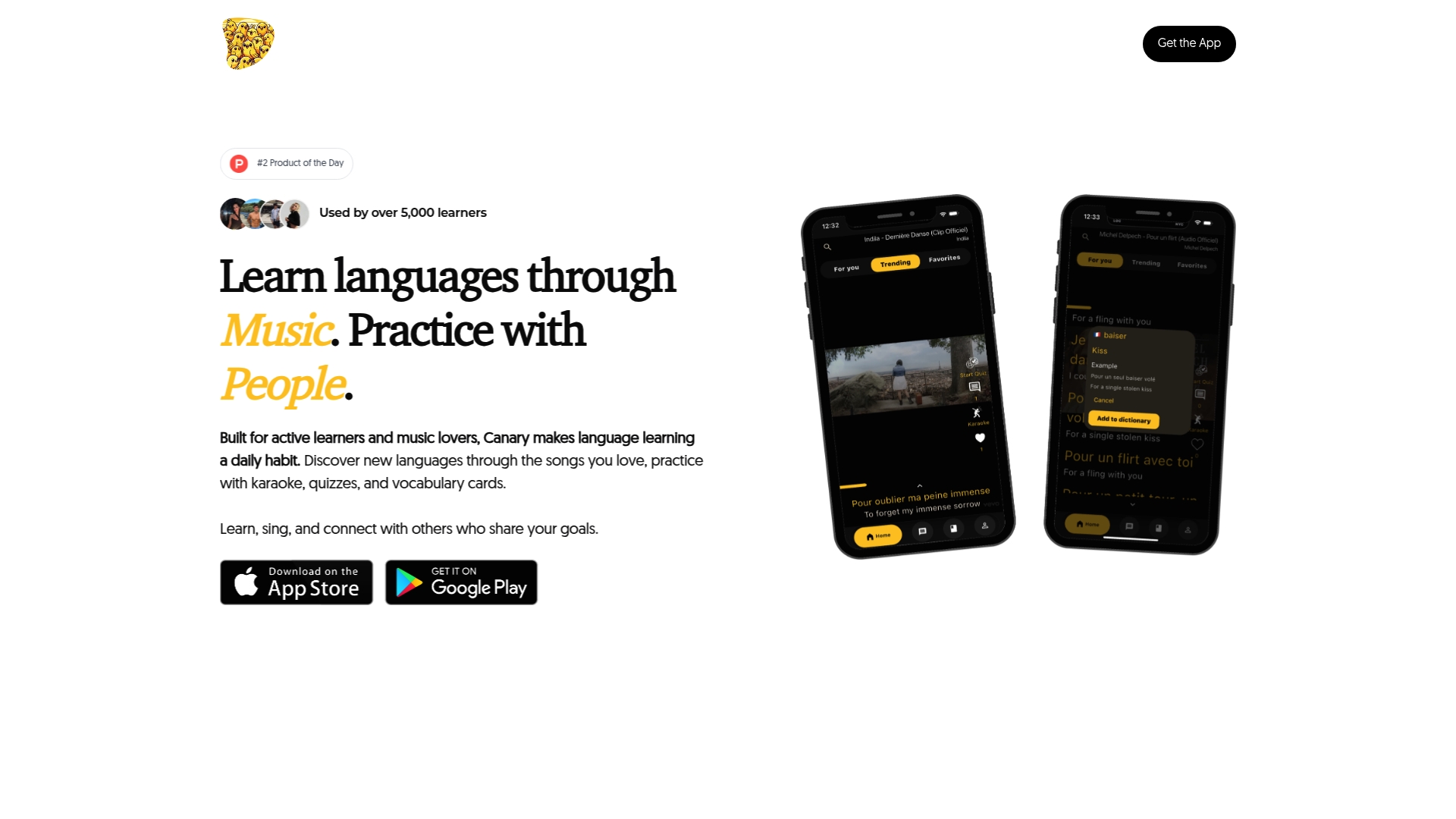
Canary offers an innovative solution by integrating music and social interaction to help you practice real pronunciation, expand your vocabulary, and understand language in context. With features designed for active learners and music lovers alike, you can sing along, take quizzes, and connect with an international community that shares your passion. Start building your confidence and fluency today by visiting Canary. Explore how music-based learning can transform your language journey and join a vibrant community ready to support you every step of the way.
Discover more about this unique approach at Canary’s homepage and see why learners worldwide choose music to accelerate progress. Don’t wait – dive into the power of musical language learning now.
Frequently Asked Questions
How can I use songs to expand my vocabulary in a new language?
Using songs can significantly enhance your vocabulary acquisition by exposing you to new words in a contextual setting. Listen actively to the lyrics and read along with the text to connect spoken words with their meanings. Consider creating a personalized playlist of your favorite songs in the target language and aim to learn three new words from each track.
What are some effective karaoke strategies for improving pronunciation?
Karaoke is a valuable tool for enhancing your pronunciation skills. Sing along with songs in your target language while focusing on the rhythm, stress, and intonation to mimic the singer’s articulation. Select songs that match your current skill level and practice them multiple times to reinforce correct pronunciation patterns.
How do interactive lyrics comprehension exercises work?
Interactive lyrics comprehension involves engaging with song lyrics in a systematic way to develop your listening and speaking skills. Break down the lyrics line by line to analyze word meanings and grammatical structures, or create gap-fill exercises to challenge your understanding. Aim to learn five new words or expressions each week from a diverse selection of songs.
What types of music-themed listening exercises can I try?
Music-themed listening exercises encourage you to actively engage with music while enhancing your language skills. You can practice lyric transcription by writing down song lyrics or compare original and translated lyrics to deepen your understanding. Create a weekly playlist that progressively increases in difficulty to challenge your listening comprehension over time.
How can I explore cultural contexts through songs?
Exploring cultural contexts through songs allows you to gain valuable insights into different cultures. Analyze storytelling within the lyrics, research the historical and social backgrounds of songs, and study artists’ perspectives. Commit to creating a monthly playlist featuring songs from various regions, documenting the cultural stories behind each track to enrich your learning experience.
What are the benefits of joining a social singing group for language learning?
Joining a social singing group can significantly enhance your language skills by providing a collaborative and supportive environment for practice. Singing with others fosters phonological processing and helps you improve pronunciation in a low-pressure setting. Seek out online or local multilingual singing groups and commit to participating in at least one session per month to maximize your practice.