Many language learners overlook the power of musical ear training for skills like pronunciation and vocabulary. Scientific evidence shows a direct link between musical training and enhanced language abilities. Musically-trained children outperform in novel word learning, revealing that ear training isn’t just for musicians. This guide will show how you can harness ear training and song-based learning for faster, more enjoyable language progress.
Table of Contents
- How music and ear training support language learning
- Popular ear training methods adapted for language learners
- Interactive technology and song-based apps for ear training
- What science says (and doesn’t) about music, ear training, and language
- How to practice ear training for real language progress
- Ready to amplify your language journey with music?
- Frequently asked questions
Key Takeaways
| Point | Details |
|---|---|
| Music boosts language skills | Song-based ear training measurably improves pronunciation and vocabulary retention for language learners. |
| Tech makes practice easy | Apps and platforms turn hit songs into fun, trackable ear training exercises anyone can use. |
| Evidence supports targeted learning | Research confirms real gains in language skills from musical methods but not from vague or generalized claims. |
| Best results blend music and study | The fastest progress comes from combining regular music ear training with traditional language lessons. |
How music and ear training support language learning
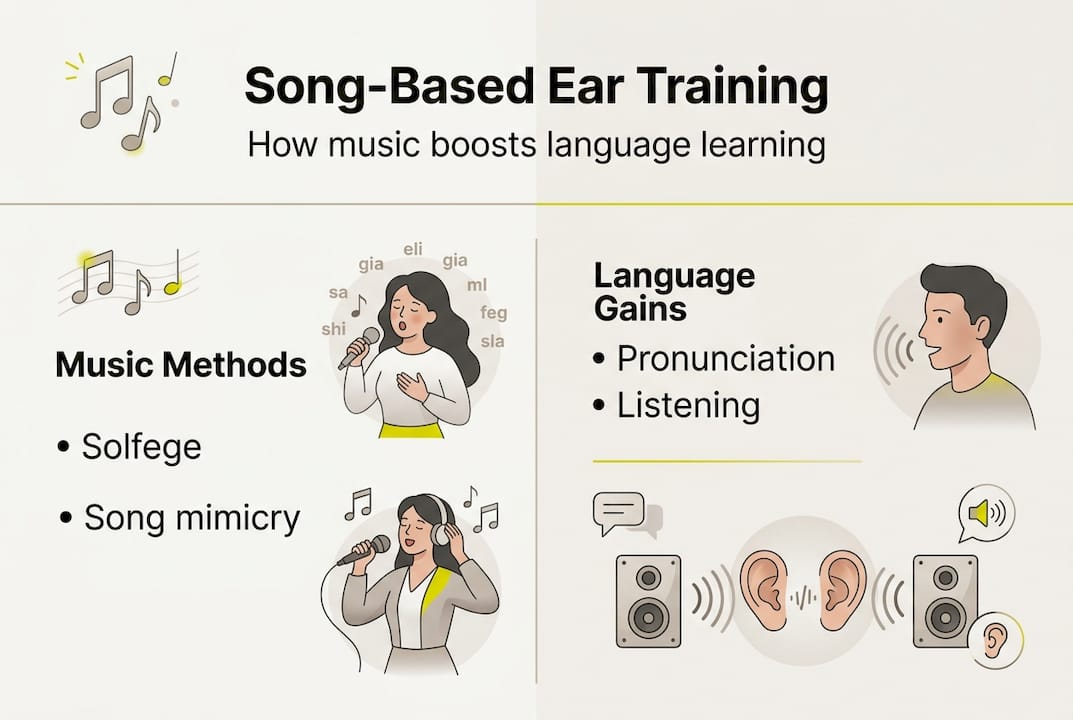
Neural and behavioral studies link music training with improved auditory perception, especially for accents and pitch. Musicians process new words faster and form stronger semantic associations than non-musicians. The Sol-fa (Do-Re-Mi) ear training method builds pitch recognition analogous to language learning through listening, imitating, reading, and writing. Song-based ear training trains the ear to detect tone, rhythm, and phonemes with remarkable precision.
Ear training’s bottom-up auditory benefits and top-down memory advantages both accelerate language skill acquisition. When you practice matching pitches or identifying intervals in songs, you’re simultaneously sharpening the neural pathways responsible for distinguishing foreign language sounds. Empirical data confirms that musically-trained learners outperform in word learning, making this approach especially valuable for pronunciation challenges.
Key benefits of music-based ear training:
- Enhanced phoneme discrimination for difficult accent sounds
- Faster semantic processing and vocabulary retention
- Improved rhythm and stress pattern recognition
- Stronger auditory memory for new words and phrases
After understanding why song-based learning isn’t just a gimmick, let’s look at how the core ear training techniques translate directly to real-world language improvements. The connection between music and language learning benefits extends far beyond simple memorization. You’re building fundamental listening skills that transfer immediately to conversation and comprehension.
Pro Tip: Start with songs in your target language that use simple, repetitive melodies. The predictable musical structure helps your brain focus on pronunciation patterns rather than complex musical elements.
Consider how children learn their first language through songs and rhymes. That same neurological pathway remains active in adults, making music an ideal vehicle for vocabulary improvement with songs. The emotional engagement of music creates stronger memory anchors than traditional flashcard methods.
Popular ear training methods adapted for language learners
Solfege (Do-Re-Mi) is easy to adapt for accent and sound recognition. The Sol-fa ear training uses songs like ‘Do-Re-Mi’ and ‘Lean on Me’ for stepwise melodies and language analogy. Interval songs help you catch language intonation and stress patterns with surprising accuracy. Native-language songs can be used to drill difficult phonemes that don’t exist in your mother tongue.
Apps and tech tools make these methods accessible and trackable. You don’t need formal music training to benefit from structured ear training exercises. The key is consistent practice with songs that match your current language level.
Comparison of ear training methods for language learners:
| Method | Best For | Time Investment | Difficulty Level |
|---|---|---|---|
| Solfege (Do-Re-Mi) | Pronunciation and pitch | 10-15 min/day | Beginner |
| Interval songs | Intonation patterns | 15-20 min/day | Intermediate |
| Lyric shadowing | Fluency and rhythm | 20-30 min/day | All levels |
| Phoneme drilling | Specific sound challenges | 5-10 min/day | Beginner |
With a grasp of the science, you can pick and choose the ear training methods that fit your learning goals and language. Different music-based language methods work better for different learning styles and target languages.
Step-by-step approach to ear training:
- Choose three songs in your target language at your comprehension level
- Listen to each song three times without lyrics to train pure listening
- Add lyrics and identify unfamiliar words or pronunciation challenges
- Practice singing along, focusing on matching native pronunciation
- Record yourself and compare to the original for accent refinement
Pro Tip: Use songs with clear vocals and moderate tempo. Ballads work better than fast rap for initial ear training because they give you time to process each sound.
The song-based learning steps you follow matter as much as the songs themselves. Structure transforms casual listening into deliberate practice that builds real skills.
Interactive technology and song-based apps for ear training
Modern apps transform popular songs into interactive listening exercises. Features like lyric translation, audio matching, and pronunciation feedback make daily practice engaging and measurable. SouNter, a lyrics and translation app, offers quizzes, vocabulary, and pronunciation features for music-driven language learning.

Choose tech tools with spaced repetition, real-world accent examples, and in-app listening tests. Even classical solfege ear training is now available digitally, making it accessible to anyone with a smartphone. The best apps combine multiple learning modes so you can practice listening, reading, speaking, and writing within the same song.
Essential features in language-learning music apps:
- Synchronized lyrics with audio playback
- Vocabulary extraction and flashcard creation
- Pronunciation comparison and feedback
- Progress tracking and spaced repetition
- Multiple accent and dialect options
Not only are classic and adapted ear training methods powerful on their own, but technology and song-based apps now supercharge learning and make daily practice fun. The explained music-learning tools available today offer features that weren’t possible even five years ago.
Popular app features and their language benefits:
| Feature | Language Benefit | Example Use |
|---|---|---|
| Lyric highlighting | Reading comprehension | Follow along as words are sung |
| Slow playback | Pronunciation clarity | Hear difficult sounds at reduced speed |
| Fill-in-the-blank | Listening accuracy | Test comprehension without visual cues |
| Karaoke mode | Speaking confidence | Practice pronunciation with backing track |
Pro Tip: Dedicate specific times for different app features. Use listening exercises during commutes, pronunciation practice when you have privacy, and vocabulary review during short breaks.
The real music learning examples from successful learners show that consistent app use, even just 15 minutes daily, produces measurable improvements within weeks. The SouNter app and similar platforms make structured practice accessible to everyone.
What science says (and doesn’t) about music, ear training, and language
Empirical research supports language gains in pronunciation, listening, and vocabulary, even for short training periods. Music training can improve auditory perception, attention, memory, and some phonological and vocabulary skills. However, music-based learning does not provide broad cognitive or socioemotional improvements for everyone.
Some studies find no broad cognitive or emotional advantages from music training, so prioritize targeted practice. The key is setting realistic expectations and focusing on specific, measurable language goals rather than hoping for general intelligence boosts.
What research confirms:
- Improved phoneme discrimination and accent recognition
- Enhanced vocabulary retention through melodic memory
- Better listening comprehension in noisy environments
- Faster processing of new words and grammatical structures
What research doesn’t support:
- General IQ increases from music training
- Broad emotional intelligence improvements
- Transfer to unrelated cognitive domains
- Automatic fluency without deliberate practice
Understanding what to expect leads directly to the most important question: how do you actually apply ear training in your everyday language studies for reliable progress? The connection between music and vocabulary retention is well-established, but you need a structured approach to maximize results.
Prioritize consistent, language-specific song practice for best results. Generic music appreciation won’t produce the same targeted benefits as deliberate ear training focused on your specific pronunciation challenges and vocabulary gaps.
How to practice ear training for real language progress
Start with familiar tunes in your target language for easier pronunciation. Recognition of melody reduces cognitive load, letting you focus entirely on the words and sounds. Use stepwise ear training exercises with solfege or apps to build foundational listening skills.
Practice shadowing, lyric recitation, and translation to engage multiple learning pathways. Track progress with simple, app-based pronunciation and listening quizzes that provide objective feedback. Music and language sessions combined yield the fastest, biggest improvements in verbal memory and fluency.
Your daily ear training routine:
- Morning: 10 minutes of passive listening to target language songs during breakfast
- Midday: 5 minutes of vocabulary review from yesterday’s songs
- Afternoon: 15 minutes of active singing and pronunciation practice
- Evening: 10 minutes of new song exploration and lyric analysis
- Weekly: 30-minute session reviewing progress and adjusting song difficulty
Mix music learning sessions with traditional study for additive benefits. The combination produces better results than either approach alone. Your brain benefits from the variety, and the emotional engagement of music makes the entire learning process more sustainable.
Pro Tip: Create themed playlists for different language goals. Use upbeat songs for vocabulary building, ballads for pronunciation work, and conversation-style duets for natural dialogue patterns.
By applying these practical steps, you can transform your language routine, making progress faster and more enjoyable. The music for fluency approach works because it aligns with how your brain naturally processes language and emotion. When you expand vocabulary with songs, you’re building neural pathways that traditional study methods can’t replicate.
Ready to amplify your language journey with music?
Connect your passion for music with science-backed language progress. The research is clear: ear training through songs accelerates pronunciation, vocabulary, and listening comprehension in ways that traditional methods simply can’t match.
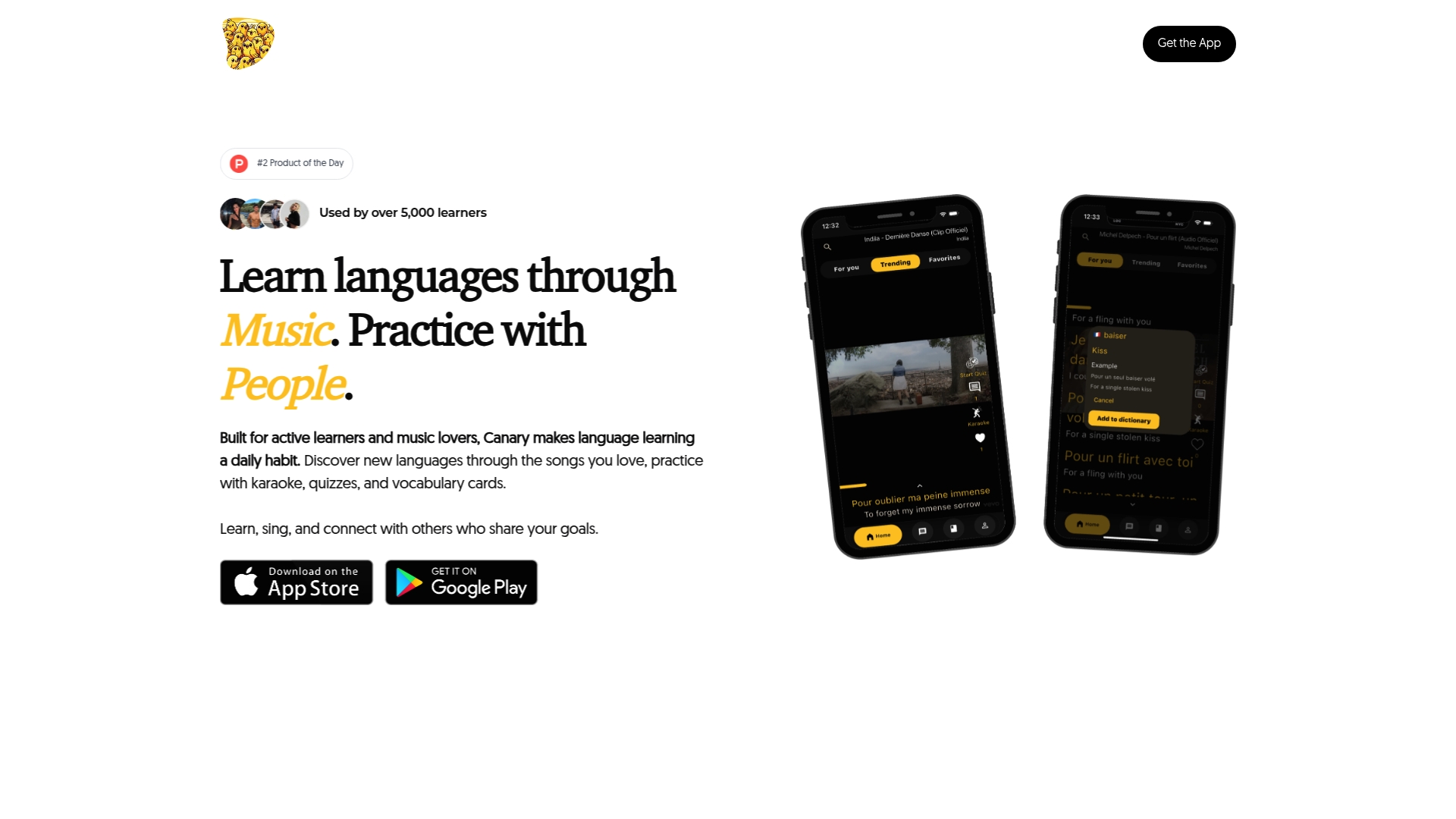
Discover structured approaches, weekly features, and community tips that transform casual listening into deliberate practice. When you learn languages with music, you’re joining thousands of learners who’ve discovered that the fastest path to fluency runs through your favorite songs. Whether you’re exploring Spanish learning with songs or tackling another language, the combination of ear training and interactive features creates an engaging daily habit.
Now that you know what works, here’s how the right tools and community resources can accelerate your results. Try out app-powered song learning and see results firsthand. The platform offers karaoke modes, vocabulary cards, and pronunciation feedback that turn every song into a comprehensive language lesson. You’ll expand vocabulary with songs while building the listening skills that make real conversations possible.
Frequently asked questions
Does ear training really help with pronunciation?
Yes, research shows that music-based ear training builds skills for accurate sound and accent recognition, directly improving pronunciation. Even short daily practice produces measurable results.
Is ear training useful if I’m not a musician?
Absolutely. Simple techniques like solfege and song mimicry are accessible to anyone and have real benefits for listening and speaking. No musical background required.
What apps can I use for ear training in language learning?
Apps like SouNter provide interactive song-based listening, lyric translation, and pronunciation tracking for popular languages. Many offer free versions to start.
Will music training improve my overall intelligence?
Current research shows music boosts vocabulary and listening but does not generally increase overall intelligence or emotional skills. Focus on specific language goals.
Can combining music and language classes speed up learning?
Yes, combined practice leads to the biggest improvements in verbal memory and fluency according to longitudinal studies. The additive effect is scientifically proven.