TL;DR:
- Effective vocabulary building combines spaced repetition, contextual learning, and daily active use. Learning in varied contexts with multiple exposures enhances long-term retention and active vocabulary use.
The most effective vocabulary booster tips combine spaced repetition, contextual learning, and varied exposure to build word knowledge that sticks for life. Cognitive science is clear: learners need 10–15 meaningful exposures to a new word before it moves into long-term memory. That number explains why reading a word once in a glossary never works. The standard industry term for this process is vocabulary acquisition, and the best methods treat it as an active, multi-sensory skill rather than a passive memorization task. The tips below are grounded in research and designed for language learners who want real results.
1. What are the best vocabulary booster tips for learning in context?
Context is the single most powerful factor in vocabulary acquisition. When you encounter a word inside a real sentence, your brain stores not just the definition but the grammar, tone, and situation around it. That extra information makes recall far more reliable than a bare word-and-translation flashcard.
Contextual vocabulary learning means recording the full sentence where you found a new word, not just the word itself. This preserves the grammatical and connotative information you need for correct usage. A word like “bleak,” for example, carries emotional weight that a dictionary definition alone cannot fully convey.
Practical ways to learn in context:
- Write the original sentence from the source, then write your own sentence using the same word.
- Group new words by topic or situation rather than alphabetically.
- Read the same word across multiple genres: news, fiction, and conversation.
- Use contextual diversity deliberately by switching between content types each week.
Pro Tip: When you write your own example sentence, make it personal. Use your name, your city, or a situation from your life. Personal sentences are processed more deeply and recalled more easily.
2. How spaced repetition systems improve vocabulary retention

Spaced repetition systems, commonly called SRS, schedule reviews of new words at increasing intervals over time. The spacing effect means your brain consolidates a memory more efficiently when you revisit it just before you would naturally forget it. This is not a theory. It is one of the most replicated findings in cognitive psychology.
The recommended daily target is 5–15 new words with regular spaced reviews over a 12-week cycle. That range produces sustainable long-term acquisition without overwhelming your working memory. Going above 15 new words per day consistently reduces retention, not increases it.
To build an effective SRS practice:
- Add new words with a full example sentence, not just the translation.
- Use cloze deletions: hide the target word in the sentence and recall it from context.
- Review your deck every day, even if only for 10 minutes.
- Retire words you recall correctly five times in a row and move them to a monthly review pile.
- Never add more than 15 new cards on any single day.
A common mistake is downloading a pre-made deck and treating it as a complete solution. Learner-created flashcards outperform pre-made decks because the act of building the card is itself a deep processing event. You are encoding the word twice before you even start reviewing.
Pro Tip: Add a small image or emoji to each flashcard that represents the word’s meaning. Visual cues create an additional memory hook that text alone cannot provide.
3. Which activities expose you to the widest range of words?
Variety in your input sources is not just enjoyable. Research shows that contextual diversity across genres and topics improves long-term retention more than repeated exposure within a single source. Learners who read only one type of content build narrower vocabularies, even if they read a lot.
The most productive activities for broad word exposure include:
- Reading above your comfort zone. The ideal reading level is where you understand approximately 90–95% of the text. That range lets you infer unknown words without losing comprehension. Staying entirely in your comfort zone produces almost no new vocabulary.
- Listening to varied audio. Podcasts, radio programs, and songs expose you to natural speech patterns, idiomatic phrases, and pronunciation at the same time. Songs in particular repeat vocabulary in emotionally charged contexts, which strengthens memory encoding. You can build vocabulary with music using a structured workflow that pairs lyrics with active recall.
- Speaking and writing with new words. Active engagement through writing original sentences and speaking in conversation drives depth of processing. Passive exposure alone is not enough to move a word into active use.
- Using interactive tools. Quizzes, vocabulary cards, and karaoke-style exercises force active recall in a low-stakes environment. These formats work because they require you to produce the word, not just recognize it.
Stephen Krashen’s research on free voluntary reading shows that wide, consistent reading produces larger vocabularies than most deliberate study methods. The key word is “wide.” Reading only one author or one subject limits the contextual diversity your brain needs.
For Spanish learners specifically, resources focused on Spanish vocabulary for daily use provide a practical entry point for building high-frequency word knowledge across everyday situations.
4. How to build a daily vocabulary routine that actually sticks
A daily routine is where good intentions become real skills. The most effective vocabulary enhancement strategies are not dramatic. They are small, consistent, and layered across the day.
A practical daily structure looks like this:
- Morning review (10 minutes). Open your SRS deck and review yesterday’s words before adding anything new. Starting with review protects retention without adding cognitive load.
- New word input (15–20 minutes). Read, listen, or watch content in your target language. Mark unfamiliar words but do not stop to look them up immediately. Finish the passage first, then check meaning in context.
- Active processing (10 minutes). Write two or three sentences using the new words you marked. Say them aloud. This step is the one most learners skip, and it is the step that matters most.
- Vocabulary journal update. Log new words with their source sentence, your own sentence, and any word family connections. Word families and root words unlock multiple related meanings at once. Over 90% of academic vocabulary derives from Latin and Greek roots, so learning one root can decode dozens of words.
- Evening passive exposure (optional). Watch a short video or listen to a song in your target language. This reinforces words you encountered earlier without requiring active effort.
Tracking progress matters as much as the practice itself. A vocabulary building checklist gives you a concrete record of growth and helps you spot gaps in your learning. Seeing 200 words logged after a month is a stronger motivator than any abstract goal.
Daily language practice builds fluency faster than longer, infrequent sessions because the brain consolidates memory during sleep. Short daily sessions give your brain more consolidation cycles than one long weekly session.
For learners building Spanish vocabulary quickly, a guide on accelerating vocabulary acquisition offers methods that complement the daily routine structure above.
Key Takeaways
The most effective approach to vocabulary acquisition combines spaced repetition, contextual learning, and daily active use to move new words from recognition into fluent production.
| Point | Details |
|---|---|
| Context beats word lists | Record full sentences with new words to preserve meaning, grammar, and tone. |
| SRS targets 5–15 words daily | Reviewing at spaced intervals over 12 weeks builds sustainable long-term retention. |
| Contextual diversity strengthens recall | Encountering words across multiple genres creates more mental hooks for each word. |
| Active use is non-negotiable | Writing and speaking with new words drives the depth of processing that passive reading cannot. |
| Root words multiply your reach | Learning Latin and Greek roots unlocks meanings across dozens of related academic words. |
Why most learners plateau, and what actually breaks through
Vocabulary learning plateaus are almost always caused by the same mistake: too much passive exposure and not enough active production. I have watched learners spend months reading and listening in their target language and then struggle to use even common words in conversation. The input was there. The output practice was not.
The fix is uncomfortable at first. You have to use words before you feel ready. Write a clumsy sentence. Say the word out loud in a conversation even if the pronunciation is not perfect. The act of attempting production forces your brain to retrieve the word under pressure, which is exactly the condition that strengthens memory.
Spaced repetition changed my own retention dramatically, but only after I stopped using pre-made decks and started building my own cards from content I actually cared about. A card built from a song lyric or a news story you found interesting carries far more personal meaning than a card from a generic frequency list. That personal connection is not a soft benefit. It is a processing advantage.
Consistency matters more than intensity. Fifteen minutes every day outperforms two hours on Saturday. The learners who build the largest vocabularies are not the ones who study hardest. They are the ones who never fully stop.
— Ben
Singwithcanary puts these techniques into practice
Singwithcanary is built around the exact principles this article covers: contextual learning, active recall, and daily exposure through content you actually enjoy. The platform uses song lyrics, karaoke exercises, and vocabulary cards to deliver words in emotionally rich, memorable contexts. Every feature is designed to move vocabulary from passive recognition to active use.
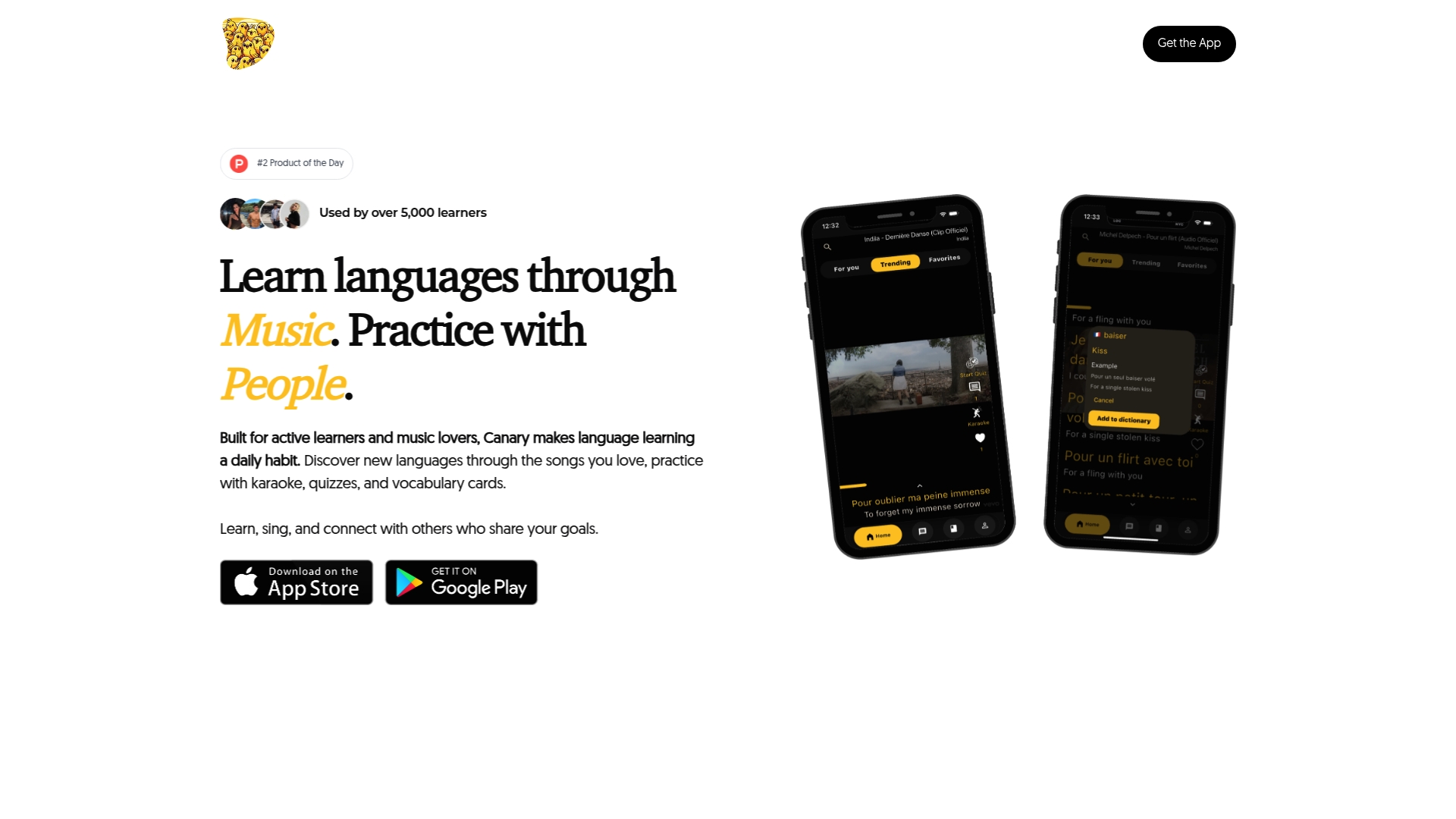
Singwithcanary’s song-based learning pairs music with interactive quizzes and vocabulary tools that reinforce spaced repetition naturally. You hear a word in a song, see it in the lyrics, and test yourself on it in a quiz. That is three exposures in one session. The platform also connects you with international learners for real conversation practice, which is the active production step most learners avoid. Sign up and add a method that makes daily practice something you look forward to.
FAQ
How many new words should I learn per day?
The research-backed target is 5–15 new words per day with spaced repetition reviews. Exceeding 15 words consistently reduces retention rather than increasing it.
Why is context so important for vocabulary learning?
Learners need 10–15 exposures to a word in varied, meaningful contexts to store it in long-term memory. Context provides the grammatical and emotional information that makes a word usable, not just recognizable.
What is the comprehensible input zone for vocabulary learning?
The comprehensible input zone is reading or listening material where you understand approximately 90–95% of the content. That level allows you to infer unknown words without losing comprehension or becoming overloaded.
Do learner-made flashcards really outperform pre-made decks?
Yes. Creating your own flashcard with a real example sentence is itself a deep processing event that encodes the word before review even begins. Pre-made decks skip that initial encoding step.
How does learning word roots help expand vocabulary faster?
Over 90% of academic vocabulary derives from Latin and Greek roots. Learning a single root like “port” (to carry) unlocks words such as transport, import, export, and portable simultaneously, multiplying your vocabulary gains per hour of study.