TL;DR:
- Effective vocabulary retention combines spaced repetition, contextual learning, and active recall, with consistent daily practice producing lasting results.
- Deep engagement with words through meaningful context, multisensory activities, and varied study methods strengthens long-term memory and language fluency.
Vocabulary retention methods are strategies designed to help you remember and recall new words efficiently and permanently. The most effective approaches combine spaced repetition, contextual learning, and active recall — three techniques backed by cognitive science and used by successful language learners worldwide. Tools like Anki, Quizlet, and Singwithcanary put these methods into practice. This vocabulary retention methods guide breaks down exactly how each technique works, why your brain responds to it, and how to build a daily routine that makes new words stick for good.
What cognitive science reveals about vocabulary retention methods
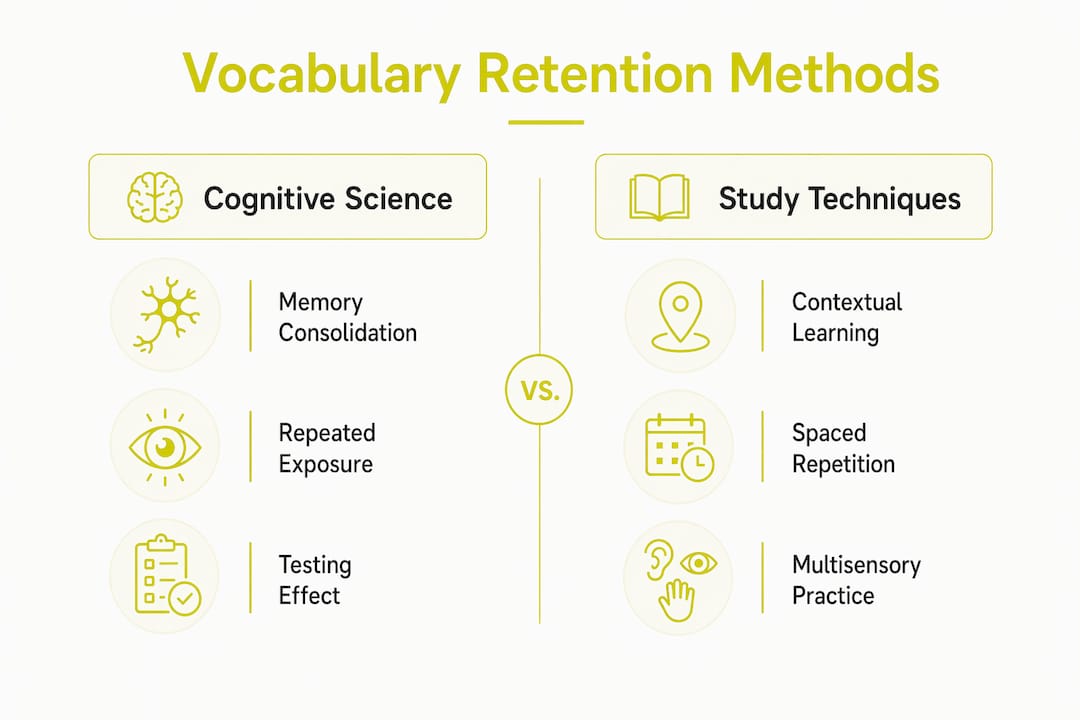
Memory consolidation is the process by which your brain moves new information from short-term storage into long-term memory. For vocabulary, this process depends heavily on how deeply you engage with a word, not just how many times you see it.
The principle of depth of processing explains this directly. A word you encounter in a story, use in a sentence, and connect to an image is processed at a much deeper level than a word you read off a list. Deeper processing creates stronger, more durable memory traces.
Here is what the research shows about how memory and vocabulary interact:
- Spaced repetition schedules reviews at increasing intervals, forcing your brain to retrieve a word just before you forget it. This spacing effect is the single most efficient way to build long-term recall.
- Active recall means testing yourself rather than re-reading. Struggle in active recall strengthens neural connections. Frustration during study signals effective learning, not failure.
- Dual coding links verbal and visual information. When you pair a word with an image or a sound, two memory pathways encode it instead of one.
- Desirable difficulty is the idea that making retrieval slightly hard during practice produces better long-term results than easy, passive review.
A minimum of 10–15 exposures to a new word in varied, contextual settings is necessary for reliable long-term memory. That number surprises most learners who assume a word is “learned” after seeing it two or three times.
Pro Tip: Don’t just review words you already know. Prioritize the cards you get wrong. Difficulty during review is the signal that real learning is happening.
How does contextual learning improve word recall?
Contextual learning is the practice of acquiring vocabulary through meaningful situations, such as stories, conversations, and real sentences, rather than isolated word lists. Learners remember words 3–5 times longer with context. That gap is too large to ignore.
The reason is straightforward. A word in a sentence carries grammar, tone, collocations, and emotional weight. A word on a flashcard carries only its definition. Your brain stores richer, more connected information when context is present, making retrieval faster and more reliable.
Here is a practical sequence for building contextual vocabulary learning into your study:
- Read or listen to level-appropriate content. Podcasts, graded readers, and song lyrics all work. The key is that you understand at least 80% of the material so context clues can do their job.
- Practice sentence mining. When you encounter an unknown word, save the entire sentence, not just the word. This is the raw material for your flashcards.
- Build cloze deletion cards. Replace the target word in your saved sentence with a blank. Your card now tests the word in context, not in isolation. This approach to contextual vocabulary learning is one of the most research-supported methods available.
- Repeat the same content multiple times. Repeated short exposures to the same level-appropriate content anchor vocabulary into long-term memory better than a single long session.
- Use authentic conversations. Speaking with native speakers forces you to retrieve words under real pressure, which deepens encoding faster than any passive method.
Pro Tip: Pick one short audio story or song and listen to it three times in a single session. Each pass reveals new vocabulary and reinforces what you caught the first time.
How to use spaced repetition and flashcards effectively
Spaced repetition software, commonly called SRS, automates the scheduling of flashcard reviews based on how well you recalled each word. Anki is the most widely used SRS tool among serious language learners. Quizlet offers a more beginner-friendly interface with built-in spaced repetition modes.

The power of SRS is in its precision. It shows you a card again in one day if you struggled, or in three weeks if you recalled it easily. This prevents you from wasting time reviewing words you already know while keeping difficult words in active rotation.
Best practices for flashcard creation
The quality of your cards determines the quality of your retention. Follow these rules:
- One meaning per card. Limiting cards to one specific meaning prevents cognitive overload and improves consolidation. A word with five definitions needs five cards.
- Use full context sentences. Contextual cloze cards yield significantly higher long-term retention than simple word-definition cards. Always include the sentence you mined the word from.
- Add progressive letter hints for hard words. Scaffolded cues for difficult vocabulary can boost retention by approximately 44%. Start with the first letter, then reveal two letters on the next review if you still struggle.
- Include audio. Hearing the word pronounced correctly while reviewing it activates dual coding and improves pronunciation at the same time.
Daily routine and common pitfalls
30–40 minutes of consistent daily practice leads to noticeable improvement in vocabulary retention within 30–45 days. Split that time: spend roughly 15 minutes on new cards, 15 minutes on scheduled reviews, and 10 minutes on reading or listening in context.
| Common Pitfall | What It Costs You | The Fix |
|---|---|---|
| Adding too many new cards daily | Review pile becomes unmanageable | Cap new cards at 10–15 per day |
| Ignoring context on cards | Words feel abstract and forgettable | Always include a full sentence |
| Skipping review days | Forgetting curve resets | Use a 5-minute minimum on rest days |
| Reviewing only easy cards | No real memory strengthening | Sort by difficulty and prioritize hard cards |
Pro Tip: Set your SRS app to show new cards in the morning and reviews in the evening. Spacing your two sessions across the day adds an extra retrieval interval without extra time.
For a deeper look at why vocabulary cards work from a cognitive standpoint, the science behind the testing effect is worth understanding before you build your first deck.
Does multisensory practice actually strengthen vocabulary?
Yes. Multisensory engagement enhances word retention more deeply than single-modality study. Engaging your eyes, ears, voice, and imagination at the same time creates multiple retrieval pathways for the same word.
Active output methods are especially powerful. Writing a new word in your own sentence, speaking it aloud in a conversation, or recording yourself using it in a short monologue all trigger what researchers call the generation effect. Creating your own sentences dramatically boosts vocabulary memory compared to passive review. You are not just recognizing the word. You are producing it, which is the skill you actually need in real communication.
Mnemonic techniques add another layer. A memory palace assigns words to specific locations in an imagined space, such as rooms in your home. Walking through that space mentally retrieves the words attached to each location. This method works best for abstract vocabulary that resists contextual anchoring.
Music is one of the most underused tools in vocabulary study. Song lyrics deliver words in rhythm, melody, and emotional context simultaneously. That combination activates more of the brain than reading a textbook sentence. Singwithcanary is built around this principle, using song lyrics as the primary vehicle for vocabulary acquisition and pronunciation practice.
“Deeper engagement with vocabulary through varied activities — writing, speaking, visualizing — is the driver of long-term retention.” — Memory research consensus via vocabulary-test.com
Practical steps to add multisensory practice to your routine: draw a quick sketch next to a new word in your notes, say every new word aloud at least three times, write one original sentence per word, and listen to a song that uses the word naturally.
What to do when vocabulary retention stalls
Vocabulary overwhelm is the most common reason learners quit. The fix is not to study harder. It is to study less new material and review more of what you already know.
Here is a troubleshooting sequence for the most frequent retention problems:
- If your review pile is out of control, stop adding new cards for one week. Clear the backlog first. A manageable deck you actually review beats a massive deck you avoid.
- If certain words refuse to stick, change the card format. Add a vivid image, record yourself saying the word in a sentence, or build a short story around it. Changing the encoding method often breaks the resistance.
- If motivation drops, switch your input source. Replace your usual podcast with a song, a TV show, or a conversation partner. Mixing intake, immersion, and active recall in balanced daily routines prevents the flatness that comes from doing the same activity every day.
- If you plateau after early progress, increase the difficulty of your input. Move from graded readers to authentic articles. Move from scripted dialogues to unscripted conversations. Your vocabulary grows when the material challenges it.
- If daily practice feels unsustainable, reduce your session length before you skip a day entirely. Ten minutes of daily language practice maintains momentum far better than three long sessions per week with gaps in between.
The goal is consistency over intensity. A learner who studies 20 minutes every day will outperform one who studies two hours on weekends.
Key takeaways
The most effective vocabulary retention strategy combines spaced repetition, contextual learning, and active output in a consistent daily routine of 30–40 minutes.
| Point | Details |
|---|---|
| Context beats word lists | Words learned in sentences or stories are remembered 3–5 times longer than isolated vocabulary. |
| 10–15 exposures are required | A single encounter with a new word is never enough for durable long-term memory. |
| Cloze cards outperform definitions | Flashcards built around full sentences with blanks trigger deeper cognitive processing. |
| Multisensory output accelerates recall | Writing, speaking, and visualizing new words creates multiple retrieval pathways in the brain. |
| Consistency matters more than volume | 30–40 minutes daily for 30–45 days produces measurable, lasting vocabulary gains. |
Why i think most learners are using only half the formula
After years of watching language learners progress, the pattern is clear. The learners who plateau are almost always doing one thing well and ignoring the rest. They build a perfect Anki deck but never speak. They consume hours of podcasts but never write a sentence. They journal every day but never test themselves.
The research is unambiguous: balanced daily routines that mix input, immersion, and active recall produce the best results. But the more surprising finding, in my experience, is what happens beyond vocabulary itself. Learners who combine methods do not just remember more words. They develop a different relationship with the language. They start thinking in it. They catch themselves humming a song and realizing they understood every word.
Music deserves more credit than most study guides give it. A song you love will replay in your head without any effort on your part. That involuntary repetition is free spaced repetition. It is the kind of exposure that does not feel like studying at all, which means you do it more often and with more emotional engagement.
My honest recommendation: build your SRS habit first, then layer in one multisensory method that you genuinely enjoy. For most people, that means music, conversation, or both. The method you stick with is always better than the method that is theoretically optimal.
— Ben
How Singwithcanary puts these methods into practice
Singwithcanary is a language learning platform that uses music as the primary context for vocabulary acquisition. Every song on the platform delivers new words inside melody, rhythm, and cultural meaning, which is exactly the kind of rich context that research shows produces durable retention.
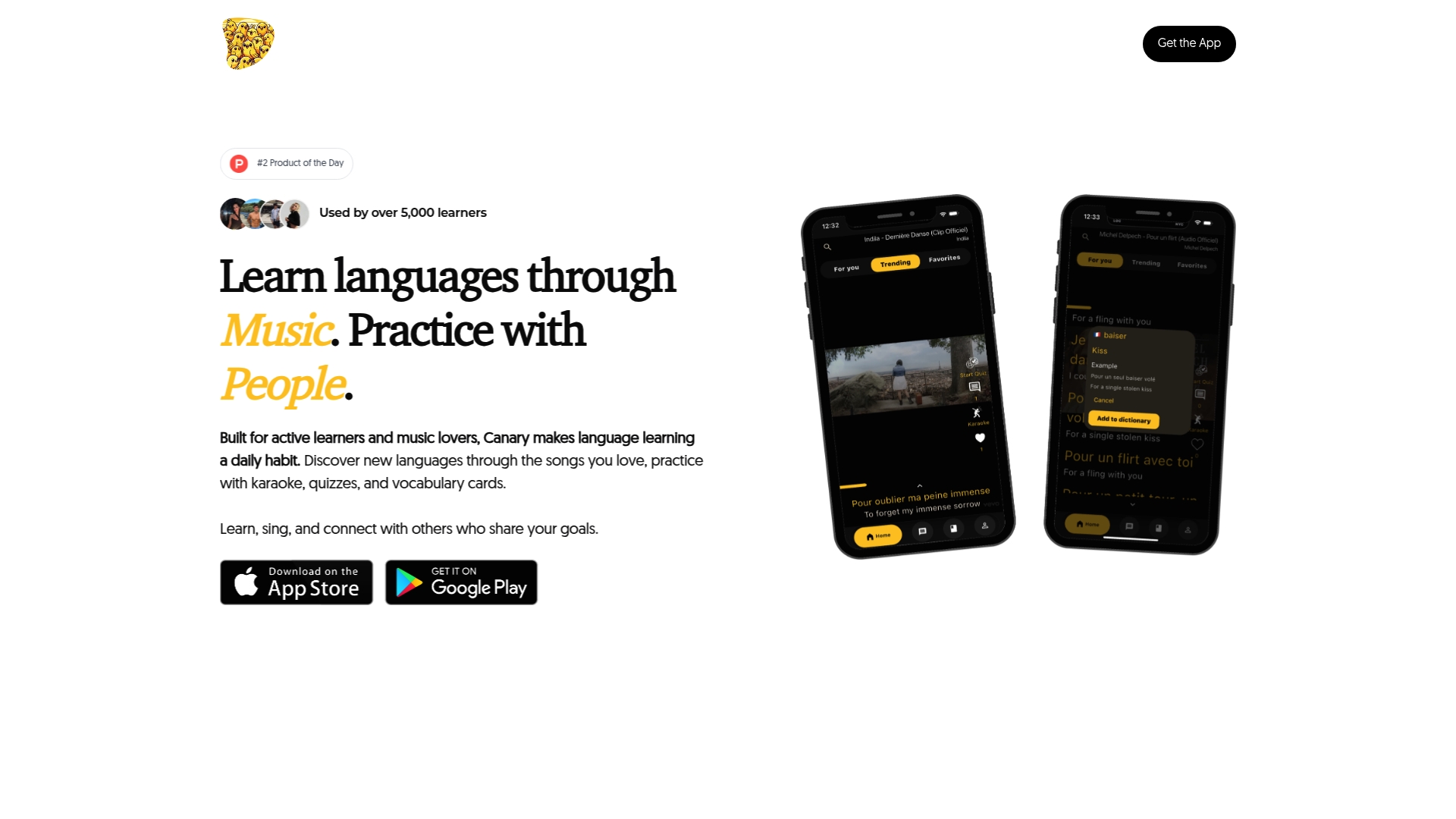
The platform combines karaoke, vocabulary cards, and quizzes so you move from passive listening to active recall within a single session. That progression mirrors the most effective study routines described in this guide. You can also practice with international learners, adding the real-conversation layer that accelerates output. If you want to learn languages with music and build a daily habit that actually holds your attention, Singwithcanary is worth exploring.
FAQ
How many times do i need to see a word to remember it?
Research shows a minimum of 10–15 exposures in varied, contextual settings is necessary for reliable long-term memory. Seeing a word once or twice is not enough for durable retention.
What is the best flashcard method for vocabulary retention?
Cloze deletion cards built from full context sentences produce significantly higher retention than simple word-definition cards. Add audio and one image per card for maximum effect.
How long should i study vocabulary each day?
30–40 minutes of consistent daily practice leads to noticeable improvement within 30–45 days. Shorter daily sessions outperform longer sessions done infrequently.
Does music actually help with learning new words?
Yes. Music delivers vocabulary in rhythm, melody, and emotional context simultaneously, activating more cognitive pathways than reading alone. Singwithcanary is built specifically around this principle.
What should i do if certain words keep slipping from memory?
Change the encoding method. Add a vivid image, write a personal story using the word, or record yourself saying it in a sentence. Resistance to a word usually means the current card format is not creating deep enough processing.