TL;DR:
- Interactive learning requires active student participation, decision-making, and immediate feedback to enhance retention and critical thinking. It engages cognitive, social, and emotional aspects of learners, producing deeper understanding and motivation compared to passive methods. Effective implementation depends on guiding teachers to create meaningful activities tailored to learners’ knowledge levels, with technology supporting but not replacing facilitation.
Interactive learning is a student-centered educational approach that requires active participation through meaningful interaction with content, peers, and instructors to drive effective understanding and skill mastery. Unlike passive methods where students absorb lectures or read static text, interactive learning demands that learners make decisions, solve problems, and engage with feedback that shapes their progress. Research consistently shows this approach produces stronger retention, deeper critical thinking, and higher motivation across every age group. Platforms like Echo360 have built entire product lines around this principle, and the evidence behind them is hard to ignore.
What is interactive learning and how does it work?
Interactive learning is defined as any instructional method that requires learners to actively engage with material rather than passively receive it. The standard industry term for this approach is active learning, and both terms are used across educational research and classroom practice. The core distinction is simple: passive learning happens to you, while interactive learning happens with you.
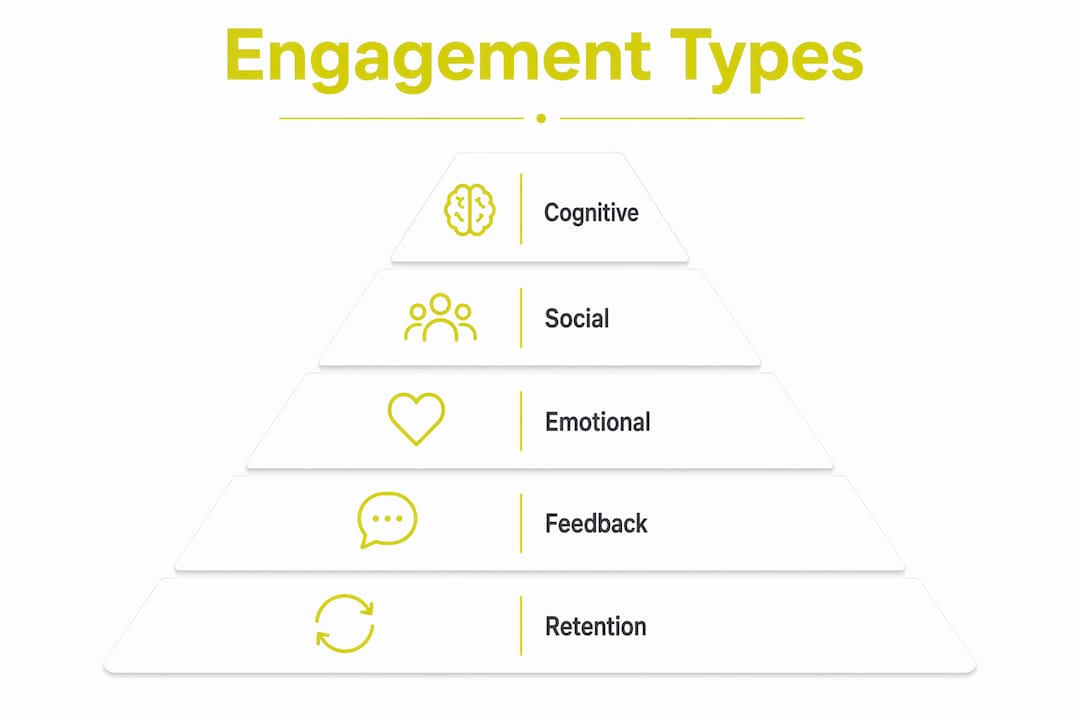
Three engagement dimensions make this work. Cognitive, social, and emotional engagement each play a distinct role in how well a learner retains and applies new knowledge. Emotional engagement, specifically the feelings of curiosity and accomplishment, is critical for long-term memory formation. Without it, even well-designed activities fall flat.
Cognitive engagement: the engine of real learning
Cognitive engagement means deep mental effort, not surface-level activity. A student clicking through a slideshow is active in a physical sense but passive in a cognitive one. True cognitive engagement requires decision-making that affects outcomes, such as choosing a strategy in a simulation, defending a position in a debate, or diagnosing an error in a math proof.
Educators often mistake busyness for learning. A worksheet full of fill-in-the-blank questions keeps hands moving but rarely pushes thinking beyond recall. The standard to aim for is whether the learner is constructing understanding, not just retrieving it.
Social and emotional engagement: the multipliers
Social engagement happens when learners collaborate with peers or interact with a teacher who asks probing questions rather than delivering answers. This mirrors the real-world skill of working through problems with others, which is exactly why interactive learning builds collaboration skills that translate directly to careers.

Emotional engagement ties the other two together. When a learner feels genuinely curious or experiences the satisfaction of solving a hard problem, the brain encodes that experience more deeply. Designing for emotional engagement means choosing tasks that feel meaningful, not just tasks that feel busy.
Why feedback loops are non-negotiable
Immediate constructive feedback prevents interactive activities from becoming guessing games. Without it, a student who answers incorrectly simply moves on with a wrong mental model. Feedback loops correct misunderstandings in real time, which is what separates a well-designed interactive activity from an expensive distraction.
Pro Tip: Build feedback into the activity itself, not just at the end. A mid-task prompt asking “Why did you choose that answer?” forces reflection and catches errors before they solidify.
What are the benefits of interactive learning over passive methods?
The benefits of interactive learning are well-documented and span retention, motivation, and skill development. The most striking evidence comes from studies comparing inquiry-based learning (IBL) to traditional instruction.
Inquiry-based learning produces superior long-term retention and knowledge transfer compared to passive methods, with retention resisting decay better than experiential or problem-based learning even after one week. That finding matters because most educational approaches show steep forgetting curves within days of instruction.
The advantages extend beyond memory:
- Higher engagement: US high school students in Chicago using AI-powered interactive platforms reported stronger engagement and more positive learning experiences than peers using traditional digital textbooks.
- Better motivation: When learners control their path through material, intrinsic motivation increases. They are solving problems, not just absorbing facts.
- 21st-century skill development: Critical thinking, collaboration, and communication all develop through active learning activities that passive instruction cannot replicate.
- Respect for prior knowledge: Adult learners especially benefit because interactive methods connect new concepts to what they already know, rather than treating every learner as a blank slate.
Adult learners thrive when interactive approaches apply concepts to real-world scenarios rather than relying on rote memorization. This is why corporate training programs have largely shifted away from lecture-based formats toward case studies, role-plays, and simulations.
What are the main types and examples of interactive learning activities?
Interactive learning activities range from low-tech classroom discussions to AI-driven simulations. The type matters less than whether the activity demands genuine decision-making and produces feedback.
Five core activity types
- Problem-solving tasks: Students work through real or simulated challenges, such as diagnosing a patient’s symptoms in a medical training program or calculating the budget for a school event. The outcome depends on the learner’s choices.
- Collaborative projects: Small groups research and present findings, debate competing solutions, or co-author a document. Platforms like Google Workspace make this accessible in both classrooms and remote settings.
- Debates and Socratic discussions: Learners defend positions with evidence, respond to counterarguments, and revise their thinking in real time. This is one of the most effective formats for developing critical thinking.
- Simulations and role-plays: Flight simulators, science lab software, and language conversation practice all place learners in realistic scenarios where their decisions have consequences.
- Quizzes with immediate feedback: Not traditional end-of-unit tests, but low-stakes formative quizzes where each wrong answer triggers an explanation. Tools like Kahoot and Quizlet Live use this format effectively.
Passive vs. interactive: a direct comparison
| Method | Learner role | Feedback | Retention outcome |
|---|---|---|---|
| Lecture | Passive receiver | Delayed or none | Low to moderate |
| Reading static text | Passive receiver | None | Low |
| Interactive quiz | Active decision-maker | Immediate | Moderate to high |
| Collaborative project | Active co-creator | Peer and instructor | High |
| Simulation or role-play | Active agent | Built-in consequences | High |
Technology-enhanced formats deserve a specific mention. Interactive language platforms that combine karaoke, vocabulary quizzes, and real-time pronunciation feedback are a strong example of how digital tools can deliver all three engagement dimensions simultaneously. The key is that the technology creates genuine interaction, not just digital page-turning.
How do you implement interactive learning effectively?
Effective implementation starts with the teacher or facilitator, not the technology. The teacher’s role shifts from information deliverer to guide who asks probing questions and provides immediate feedback. That shift is harder than it sounds, because it requires resisting the urge to simply explain the answer.
Match interactivity to learner competence
Guided discovery suits novices better than open-ended problem solving. A student encountering a concept for the first time needs structured scaffolding, not a blank canvas. Open-ended inquiry works best once foundational knowledge is in place. Skipping this step is the most common reason interactive lessons fail: the activity overwhelms learners who lack the background to engage meaningfully.
Practical steps for educators and parents:
- Start with a clear learning goal, then choose the activity format that requires that specific type of thinking.
- Use probing questions like “What would happen if…?” or “Why does that work?” rather than yes/no prompts.
- Build in reflection time after activities so learners consolidate what they discovered.
- Avoid adding technology for novelty alone. A well-run classroom debate outperforms a poorly designed app every time.
Pro Tip: When introducing a new interactive format, run one low-stakes practice round first. Students who understand the rules of the activity spend their cognitive energy on the content, not the mechanics.
Adding digital elements alone does not create interactivity. True interactive learning requires decision-making that affects learning outcomes. A video with a pause-and-reflect prompt is more interactive than a gamified app that rewards clicking speed.
Key takeaways
Interactive learning outperforms passive instruction because it requires cognitive, social, and emotional engagement that drives retention, critical thinking, and real-world skill development.
| Point | Details |
|---|---|
| Active participation is the core requirement | Learners must make decisions that affect outcomes, not just complete tasks. |
| Three engagement dimensions drive results | Cognitive, social, and emotional engagement each contribute to retention and motivation. |
| Feedback loops are non-negotiable | Immediate, tailored feedback prevents wrong mental models from taking hold. |
| Match activity to learner level | Guided discovery works for novices; open-ended inquiry suits learners with foundational knowledge. |
| Technology supports but does not replace facilitation | The teacher’s role as guide and feedback provider determines whether interactive activities actually work. |
Why I think most “interactive” lessons miss the point
The word interactive has become a marketing label. Schools buy interactive whiteboards, companies deploy e-learning modules with animated characters, and parents download apps with colorful feedback sounds. Almost none of it qualifies as genuinely interactive in the research sense.
What I have seen work, consistently, is when the learner cannot move forward without thinking. Not clicking. Not watching. Thinking. A well-designed simulation where a wrong choice produces a visible consequence teaches more in ten minutes than an hour of animated slides. A teacher who responds to a student’s answer with “Interesting. What evidence supports that?” creates more cognitive engagement than any piece of software I have encountered.
The uncomfortable truth is that real interactive learning is harder to design and harder to facilitate than passive instruction. It requires teachers to tolerate ambiguity, let students struggle productively, and resist the pull of just telling them the answer. Most professional development programs do not train for this. Most ed-tech products do not require it.
My advice: before adopting any new tool or method, ask one question. Does this require the learner to make a meaningful decision that changes what happens next? If the answer is no, it is not truly interactive, regardless of what the product page says.
— Ben
How Singwithcanary brings interactive learning to language education
Singwithcanary applies every principle covered in this article to language learning, and does it through music. The platform combines karaoke, vocabulary cards, and pronunciation quizzes so learners engage cognitively, socially, and emotionally in every session. Real-time feedback on pronunciation means no wrong model goes uncorrected. The social layer connects you with international learners, so collaboration is built into the experience from day one.
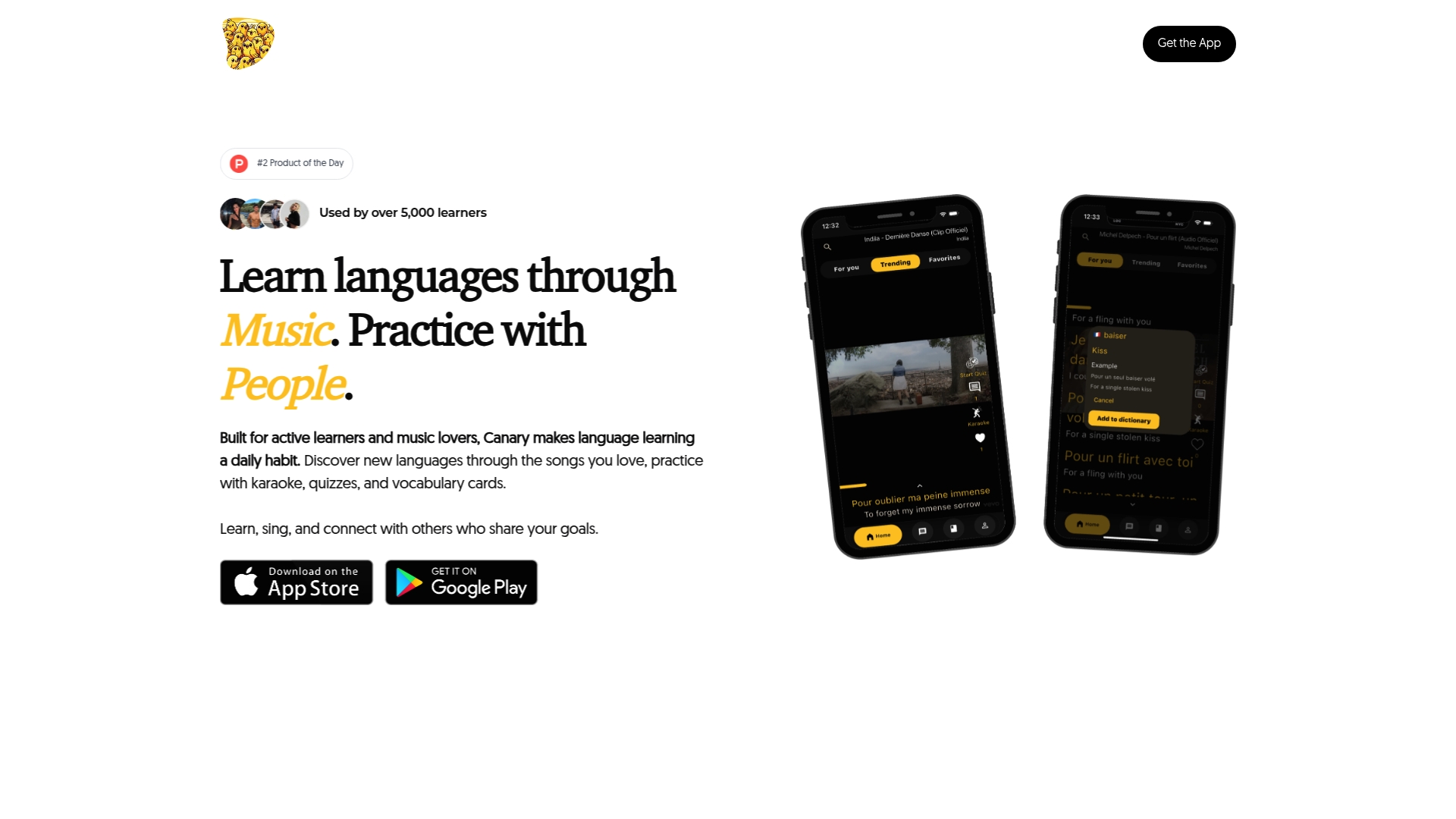
If you are an educator, student, or parent looking for a method that actually demands active participation, learn languages with music on Singwithcanary. The platform turns the research on interactive learning into a daily habit that sticks.
FAQ
What is the interactive learning definition in simple terms?
Interactive learning is any educational method that requires learners to actively engage with content, make decisions, and receive feedback, rather than passively listening or reading.
How does interactive learning improve retention?
Inquiry-based learning, a core form of interactive learning, produces superior long-term retention compared to passive methods, with knowledge resisting decay even after one week.
What are the most effective interactive learning activities?
Problem-solving tasks, collaborative projects, debates, simulations, and formative quizzes with immediate feedback are the most research-supported interactive learning activities across K-12 and adult education contexts.
Is interactive learning effective for adult learners?
Adult learners benefit strongly from interactive methods because the approach connects to real-world scenarios and respects prior knowledge, replacing rote memorization with applied practice and guided feedback.
Does technology automatically make learning interactive?
No. Adding digital elements does not create interactivity. True interactive learning requires learner decisions that affect outcomes, which technology can support but cannot guarantee on its own.