TL;DR:
- Reward-based language learning uses incentives and game mechanics to motivate progress and enhance fluency. Research shows that combining extrinsic rewards with engaging, meaningful content improves motivation, memory, and speaking skills. To sustain long-term progress, systems must evolve and emphasize enjoyment over external rewards alone.
Reward-based language learning is defined as an educational method that uses structured incentives, positive reinforcement, and game mechanics to motivate learners and accelerate language skill acquisition. Rooted in operant conditioning and Flow Theory, this approach treats motivation not as a personality trait but as a system you can design. Research shows that gamification in language learning produces measurable gains in engagement, working memory, and exam performance. The standard academic term for this method is incentive-based language education, and both terms describe the same core principle: rewards shape behavior, and behavior builds fluency.
What is reward-based language learning and how does it work?
Reward-based language learning works by triggering the brain’s dopamine response every time a learner completes a task and receives positive feedback. That feedback can be a point, a badge, a correct answer notification, or simply the satisfaction of finishing a song in a new language. The mechanism is grounded in operant conditioning, the principle that behaviors followed by positive outcomes are repeated. Flow Theory adds a second layer: when task difficulty matches your current skill level, you enter a focused mental state where learning feels effortless and time disappears.

Reward systems in language learning typically fall into two categories: extrinsic and intrinsic. Extrinsic rewards include points, leaderboards, streaks, and certificates. Intrinsic rewards come from the activity itself, such as the pleasure of understanding a song lyric you could not decode last week, or the confidence of holding a conversation with a native speaker. The most effective systems use extrinsic rewards to get you started, then gradually shift toward intrinsic engagement as your skills grow.
Key elements of a well-designed reward system
- Points and badges signal progress and give short-term motivation boosts
- Immediate feedback corrects errors before they become habits
- Progress tracking makes invisible improvement visible
- Evolving challenges prevent boredom by raising difficulty as skills improve
- Social recognition adds accountability and community belonging
Pro Tip: Set a personal milestone before each study session, such as learning five new words from a song. Completing that micro-goal triggers the same reward circuit as earning a badge, without needing an app to do it for you.
What does the research say about incentive-based language education?

The evidence for reward-based learning is specific and growing. A 10-month gamified A-STAR reward system improved ESL learners’ motivation, participation, and exam performance, with the strongest gains among underserved students who had the least prior engagement. That finding matters because it shows reward systems do not just help already-motivated learners. They can reach learners who have disengaged from traditional instruction.
A separate study of 140 undergraduate EFL learners found that structural gamification with points and feedback enhanced working memory and reduced foreign language anxiety over a single semester. Reduced anxiety is significant because anxiety is one of the most consistent predictors of poor language performance. When learners feel safe to make mistakes, they practice more, and practice volume drives fluency.
Research on extrinsic rewards specifically found that tangible and intangible rewards improved writing performance among 123 Chinese secondary school students, even when those rewards did not directly increase intrinsic motivation. The practical implication is clear: you do not need to love studying to perform better. The right incentive structure produces results regardless of your starting attitude.
“Making learning fun through ‘ludicization’ is often more effective than accumulating points and badges alone. It fosters critical learner qualities like adaptability and ambiguity tolerance, which are essential for real-world language use.”
A study of 256 participants confirmed that gamification fosters learner adaptability, a quality that helps learners handle unfamiliar vocabulary, accents, and cultural contexts without shutting down. That quality is exactly what separates a learner who can pass a test from one who can hold a real conversation.
| Research finding | Participants | Key outcome |
|---|---|---|
| A-STAR gamified reward system | ESL underprivileged pupils | Higher motivation, participation, and exam scores |
| Structural gamification with points | 140 EFL undergraduates | Improved working memory, reduced anxiety |
| Tangible and intangible rewards | 123 secondary school students | Better writing performance |
| Ludicization and learner attributes | 256 participants | Greater adaptability and ambiguity tolerance |
Best practices and challenges in reward-based language learning
The biggest risk in reward-based learning is novelty decay. Extrinsic rewards lose impact over time as the brain habituates to the same stimulus. A streak counter that thrilled you in week one becomes background noise by week six. This is not a flaw in the learner. It is a predictable neurological response, and good system design accounts for it.
The solution is not to add more rewards. The solution is to shift the source of motivation from external to internal. Multilingual instructors and experienced educators consistently find that learners who connect with the content itself, through music, stories, or real conversations, sustain progress far longer than those chasing points alone. Words learned in enjoyable contexts are recognized more accurately after 24 hours than words learned through neutral repetition, because enjoyment activates the brain’s reward-memory circuits even without an explicit prize.
Common pitfalls and how to avoid them
- Relying only on streaks. Streaks reward consistency but not quality. Pair them with comprehension checks or vocabulary tests to make sure you are actually learning, not just showing up.
- Ignoring difficulty progression. Static challenges disengage learners. Adaptive reward challenges that match difficulty to your current skill level keep you in the flow state where deep learning happens.
- Skipping social interaction. Practicing alone limits your exposure to real-world variation in pronunciation and vocabulary. Group activities and conversation practice add a layer of social reward that no app badge can replicate.
- Treating gamification as the whole method. Gamification is a delivery mechanism, not a curriculum. Balanced integration with non-digital pedagogy produces more durable proficiency gains than gamification alone.
- Setting goals that are too large. Big goals feel distant and produce no dopamine. Break them into weekly or daily targets with a clear reward attached to each one.
Pro Tip: Every four weeks, replace one of your regular study activities with something new, such as a different song genre, a new conversation partner, or a different type of quiz. Novelty resets the reward response and keeps motivation high.
How to build reward-based techniques into your routine
Applying reward strategies for language acquisition does not require a formal program. You can build an effective system with a few deliberate choices about how you structure your practice time.
Start with interactive music methods as your primary content source. Music provides built-in repetition, emotional engagement, and cultural context. Those three factors together create the conditions for deep vocabulary retention without the grind of flashcard drilling. Singing along to a song in your target language is a reward in itself, which makes it one of the most sustainable daily habits you can build.
Layer in social practice to add accountability and real-world feedback. Group language learning activities such as conversation circles, collaborative quizzes, and karaoke sessions with other learners create social rewards that reinforce individual effort. Knowing that someone else will hear your pronunciation next week is a powerful motivator to practice this week.
Recommended activities to build into your weekly routine:
- Listen to one song in your target language and write down every word you recognize
- Use quizzes and vocabulary cards to test yourself after each session
- Set a weekly word count goal and track it visually on paper or a simple spreadsheet
- Join a conversation session with an international learner at least once per week
- Reward yourself with a favorite activity after completing a full week of practice
The key is consistency over intensity. Thirty focused minutes daily with a clear reward structure outperforms three-hour weekend sessions with no feedback loop.
Key Takeaways
Reward-based language learning works because it aligns how the brain processes motivation with how it stores language, making structured incentives one of the most evidence-backed tools available to learners.
| Point | Details |
|---|---|
| Extrinsic rewards drive early progress | Points, badges, and feedback loops boost motivation and exam performance, especially for disengaged learners. |
| Intrinsic motivation sustains long-term gains | Music, stories, and social interaction activate reward-memory circuits and prevent novelty decay. |
| Flow Theory guides system design | Matching task difficulty to skill level keeps learners engaged and reduces cognitive overload. |
| Novelty decay is a real risk | Reward systems must evolve with the learner or they lose their motivational effect within weeks. |
| Balance is the defining factor | Combining gamification with non-digital, context-rich practice produces the most durable fluency gains. |
Why I think most learners misuse reward systems
Most learners treat rewards as the goal rather than the mechanism. They chase streaks, collect badges, and feel productive without actually improving. I have seen this pattern repeatedly: a learner logs 90 consecutive days on a gamified app and still cannot hold a five-minute conversation. The streak became the reward, and the language became secondary.
The research backs this up. Gamification without content depth produces short-term engagement and shallow retention. What actually works is using rewards to get you to the content, then letting the content take over. A song you love in Italian will teach you more vocabulary in one week than a month of badge-chasing, because you will replay it voluntarily, sing it in the shower, and look up words you genuinely want to know.
My honest advice is to treat your reward system as scaffolding, not a destination. Build it to get you started, then gradually replace the external incentives with activities you find genuinely enjoyable. That shift from “I have to practice to keep my streak” to “I want to practice because I love this song” is the moment real fluency begins. The learners who reach conversational fluency fastest are not the ones with the most points. They are the ones who found a way to make the language itself feel like the reward.
— Ben
Singwithcanary and reward-based learning in practice
Singwithcanary is built around the principle that the most powerful reward in language learning is the activity itself.
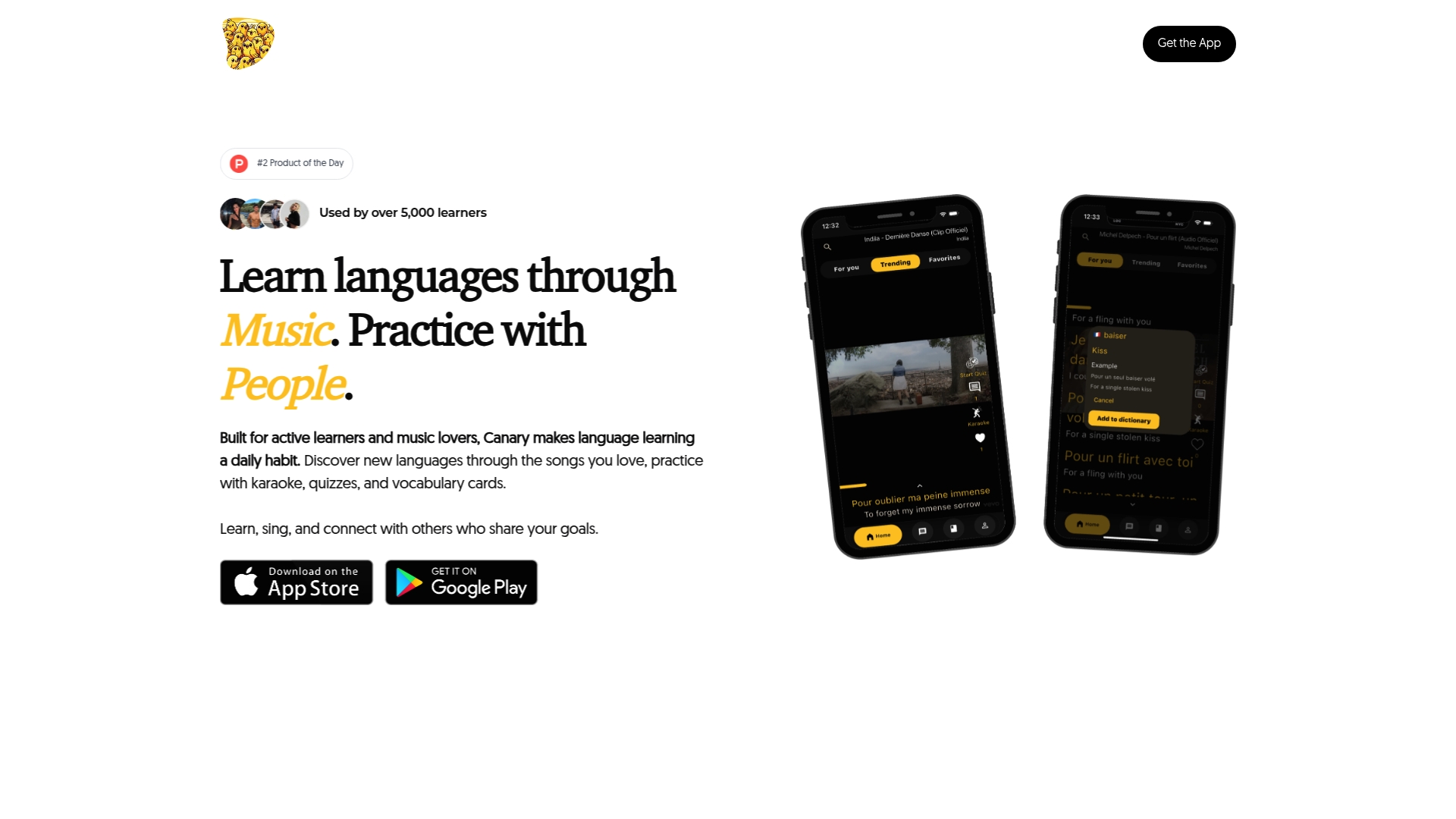
The platform combines song-based learning with karaoke, vocabulary cards, and quizzes, creating a natural reward loop every time you finish a track, nail a pronunciation, or recognize a word you learned last week. Social features let you practice with international learners, adding the community reward layer that solo apps cannot provide. If you want to experience what it feels like when learning languages with music replaces the grind of traditional study, Singwithcanary is worth exploring. You can also check out the weekly song feature to start building your music-based practice habit today.
FAQ
What is reward-based language learning?
Reward-based language learning is an educational method that uses incentives such as points, badges, feedback, and enjoyable content to motivate learners and improve language skill acquisition. It draws on operant conditioning and Flow Theory to make practice consistent and effective.
How does gamification differ from reward-based learning?
Gamification is one tool within reward-based learning, applying game mechanics like leaderboards and streaks to study activities. Reward-based learning is the broader framework that includes both extrinsic game elements and intrinsic motivators like music and social interaction.
Do rewards actually improve language learning outcomes?
Yes. Research shows that structured reward systems improve exam performance, reduce foreign language anxiety, and enhance working memory in language learners, with the strongest effects when rewards are paired with engaging, context-rich content.
What is the biggest risk of using rewards in language learning?
Novelty decay is the primary risk. Extrinsic rewards lose their motivational effect over time, so effective systems must evolve with the learner and gradually shift toward intrinsic engagement through enjoyable content like music and conversation.
Can music function as a reward in language learning?
Music is one of the most effective intrinsic rewards available. Words learned in enjoyable musical contexts are recognized more accurately after 24 hours than words learned through neutral repetition, because music activates the brain’s reward-memory circuits directly.