TL;DR:
- Song lyric immersion actively engages learners with lyrics to improve vocabulary, pronunciation, and listening skills. Research shows it outperforms traditional methods, with significant gains in test scores and motivation through emotional connection. Using tools like LyricsTraining, Spotify, and social practice, focused short sessions enable long-term language mastery.
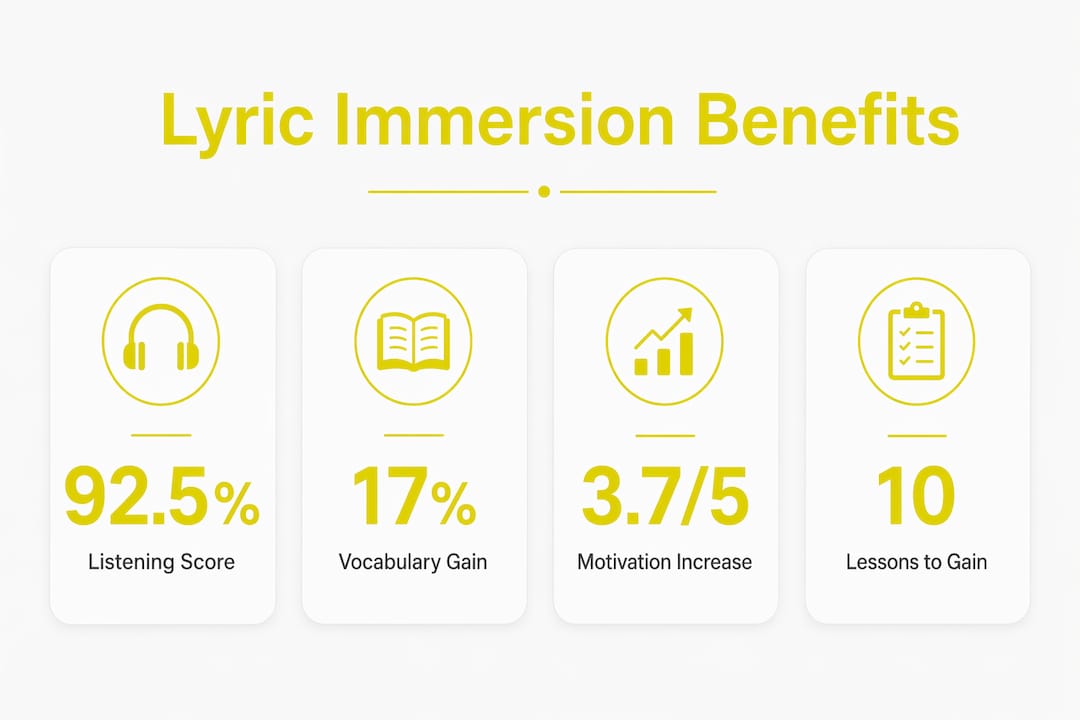
Song lyric immersion is defined as an active language learning technique where learners deeply engage with song lyrics to build vocabulary, sharpen pronunciation, and develop listening comprehension. Unlike passive music listening, this method treats lyrics as structured text, combining musical memorability with deliberate linguistic analysis. Platforms like Spotify and LyricsTraining have made this approach more accessible than ever. Research confirms the results are real: learners using song-based task methods scored an average post-test listening score of 92.50 versus 53.96 for traditional instruction, a gap that is hard to ignore.
What is song lyric immersion and why does it work?
Song lyric immersion is the practice of using song lyrics as a primary learning text rather than background entertainment. The standard academic term for the broader category is music-mediated language learning, but song lyric immersion describes the specific, hands-on engagement with written and sung lyrics as a learning tool. You read them, analyze them, fill in gaps, and sing them back.

The cognitive explanation comes from dual-coding theory, which holds that the brain encodes information through two separate channels: verbal and visual or auditory. When you process a lyric, your brain stores the word’s meaning AND its melodic context at the same time. That double encoding makes recall significantly stronger than reading a vocabulary list alone.
This is why a song you heard at age 15 still surfaces word-for-word decades later. Music creates memory hooks that plain text cannot replicate. For language learners, that is not just a fun quirk. It is a structural advantage you can build a study system around.
How does lyric immersion compare to traditional methods?
The performance gap between lyric immersion and conventional instruction is measurable and consistent. In one controlled study, learners using song-based Task-Based Language Teaching scored 92.50 on listening post-tests compared to 53.96 for the control group after just five lessons. That is not a marginal improvement. It represents a fundamentally different learning outcome.
A separate intervention with eighth-grade students using Spotify alongside structured lyric analysis showed vocabulary mastery rose by 12.75 points on average, with pre-test scores of 60.86 climbing to 73.61. The statistical significance was clear, with a t-count of 28.84 exceeding the required threshold of 2.080. These are not anecdotal wins. They are reproducible results tied to specific methods.
| Method | Listening Score | Vocabulary Gain |
|---|---|---|
| Song lyric immersion (TBLT) | 92.50 average post-test | Significant improvement |
| Traditional instruction | 53.96 average post-test | Baseline |
| Spotify + lyric analysis | Post-test mean 73.61 | +12.75 points |
Structured engagement also lifts motivation. One 10-week music-based lyric program saw engagement scores rise from 3.06 to 7 and test scores climb from 65% to 82%. Engagement and performance move together when the learning method connects emotionally.
Pro Tip: Compare your pre-study vocabulary score on a short quiz before starting a lyric immersion session. Retake it after two weeks. Tracking the gap keeps you honest about what is actually working.
What lyric immersion techniques actually work?
Knowing the theory matters less than knowing what to do on a Tuesday afternoon with 20 minutes to spare. These techniques are ordered by learning stage, not difficulty.
-
Read the lyrics silently first. Before you press play, read the lyrics as plain text. Identify unfamiliar words and look them up. This step separates comprehension from melody, which prevents the song’s rhythm from masking vocabulary gaps you do not yet know you have.
-
Run a cloze exercise. Print or copy the lyrics and delete every seventh word or every verb. Try to fill in the blanks from memory after one listen. This forces active recall rather than passive recognition. LyricsTraining is built around exactly this format.
-
Listen for pronunciation patterns. Play the song and focus on how the singer connects words, drops syllables, or shifts stress. English, Spanish, and French all have spoken rhythm patterns that textbooks rarely teach. Songs expose these patterns naturally.
-
Sing it out loud. Once you understand the vocabulary and have heard the pronunciation, sing along. This is where muscle memory forms. Your mouth learns the sounds by repeating them in a rhythmic, emotionally charged context.
-
Transition to speaking. After mastering a song, use three to five of its new words in a spoken sentence or conversation. Over-reliance on melody can limit your ability to recognize vocabulary outside of the musical context. Speaking exercises close that gap.
The most common mistake learners make is skipping step one and going straight to singing. Melody is seductive. It feels like learning because it feels good. But singing words you do not understand is closer to mimicry than language acquisition.
Pro Tip: Use a notebook to write down three new words from every song you study. Write each word in a sentence you create yourself, not one from the lyrics. That small act of production locks the word into active vocabulary.
Why does emotional engagement make lyric immersion so effective?
Emotional connection is not a soft benefit. It is a measurable driver of retention and motivation. Music-based language learning reduces anxiety and creates a relaxed atmosphere that makes learners more willing to take risks with new vocabulary and pronunciation. That willingness is where real progress happens.
Several specific emotional mechanisms are at work:
- Reduced anxiety: Singing feels less high-stakes than speaking in a classroom. Learners who freeze during oral exams often perform better when the same vocabulary appears in a song context.
- Positive association: When you love a song, you return to it voluntarily. Voluntary repetition is the engine of retention.
- Cultural depth: Lyrics carry slang, idioms, and storytelling structures that no textbook replicates. A single Rosalía song teaches you more about colloquial Spanish than a grammar chapter on subjunctives.
- Soundscape first: Ethnomusicology research shows that initial engagement with foreign-language songs as pure soundscapes builds positive emotional associations before detailed analysis begins. You do not need to understand every word to fall in love with a language through its music.
The importance of song lyrics immersion extends beyond vocabulary counts. It shapes how you feel about the language itself, and that feeling determines whether you practice tomorrow or quit.
Which digital tools best support lyric immersion practice?
The right tools remove friction and add feedback. These are the platforms that language learners actually use for structured lyric work.
| Tool | Primary Function | Best For |
|---|---|---|
| LyricsTraining | Cloze exercises with real songs | Listening and gap-fill practice |
| Spotify | Lyrics display synced to audio | Pronunciation and reading along |
| YouTube | Music videos with captions | Visual context and cultural exposure |
| Singwithcanary | Karaoke, quizzes, vocabulary cards | Full lyric immersion with social practice |
LyricsTraining is purpose-built for lyric immersion. It pulls licensed songs and removes words at adjustable difficulty levels, so you fill in blanks in real time as the song plays. Spotify’s synchronized lyrics feature lets you read along at native speed, which trains your eye and ear simultaneously.
YouTube adds a visual layer. Music videos show cultural context, body language, and setting that pure audio cannot provide. Watching a French artist perform in Paris while reading subtitles is a form of cultural immersion that a classroom cannot replicate.
Singwithcanary combines these functions with a social layer. You practice lyrics through karaoke and quizzes, then connect with international learners to use that vocabulary in real conversation. That transition from lyric practice to live speaking is exactly what the research recommends.
Short focused sessions of around 10 minutes with active exercises like gap-filling outperform long passive listening sessions for long-term retention. Ten minutes of LyricsTraining beats two hours of background music every time.
Key takeaways
Song lyric immersion works because it combines emotional engagement with active cognitive processing, producing measurable gains in vocabulary, listening, and pronunciation that passive methods cannot match.
| Point | Details |
|---|---|
| Active beats passive | Reading, analyzing, and singing lyrics outperforms background listening for vocabulary retention. |
| Dual-coding drives recall | Music encodes language in two brain channels at once, making words stick longer. |
| Separate comprehension from melody | Always read lyrics as text before singing to avoid masking vocabulary gaps. |
| Short sessions win | Ten-minute focused exercises like cloze drills beat extended passive exposure for retention. |
| Transition to speaking | Use new song vocabulary in spoken sentences to build real communicative competence. |
The part most learners skip (and why it costs them)
I have watched a lot of learners pick up song lyric immersion with genuine enthusiasm and then plateau after a few weeks. The pattern is almost always the same. They find songs they love, they sing along, they feel progress. Then they hit a wall where their spoken language does not improve even though their singing sounds great.
The problem is the transition step. Singing a word correctly inside a melody is a different motor skill from producing that word in a conversation. The melody acts as a scaffold. Remove the scaffold and the word sometimes collapses. I learned this firsthand when I could sing entire verses of a French song but stumbled over the same vocabulary in a real exchange.
The fix is deliberate and unglamorous. After every lyric session, write three sentences using new words. Say them out loud without music. Record yourself if you can. That five-minute exercise is what converts lyric knowledge into speaking ability. Most learners skip it because it feels less fun than singing. That is exactly why it works so well when you do it.
Consistent short sessions also matter more than most people expect. Two 10-minute sessions daily produce better results than one 90-minute weekend marathon. The brain consolidates language during sleep, so frequent exposure gives it more opportunities to do that work. Patience with this process is not passive. It is a deliberate strategy.
— Ben
Practice lyric immersion every day with Singwithcanary
If you are ready to move from theory to daily practice, Singwithcanary is built for exactly this. The platform combines karaoke, lyric quizzes, and vocabulary cards so you engage with song lyrics the way the research recommends: actively, repeatedly, and with real feedback.
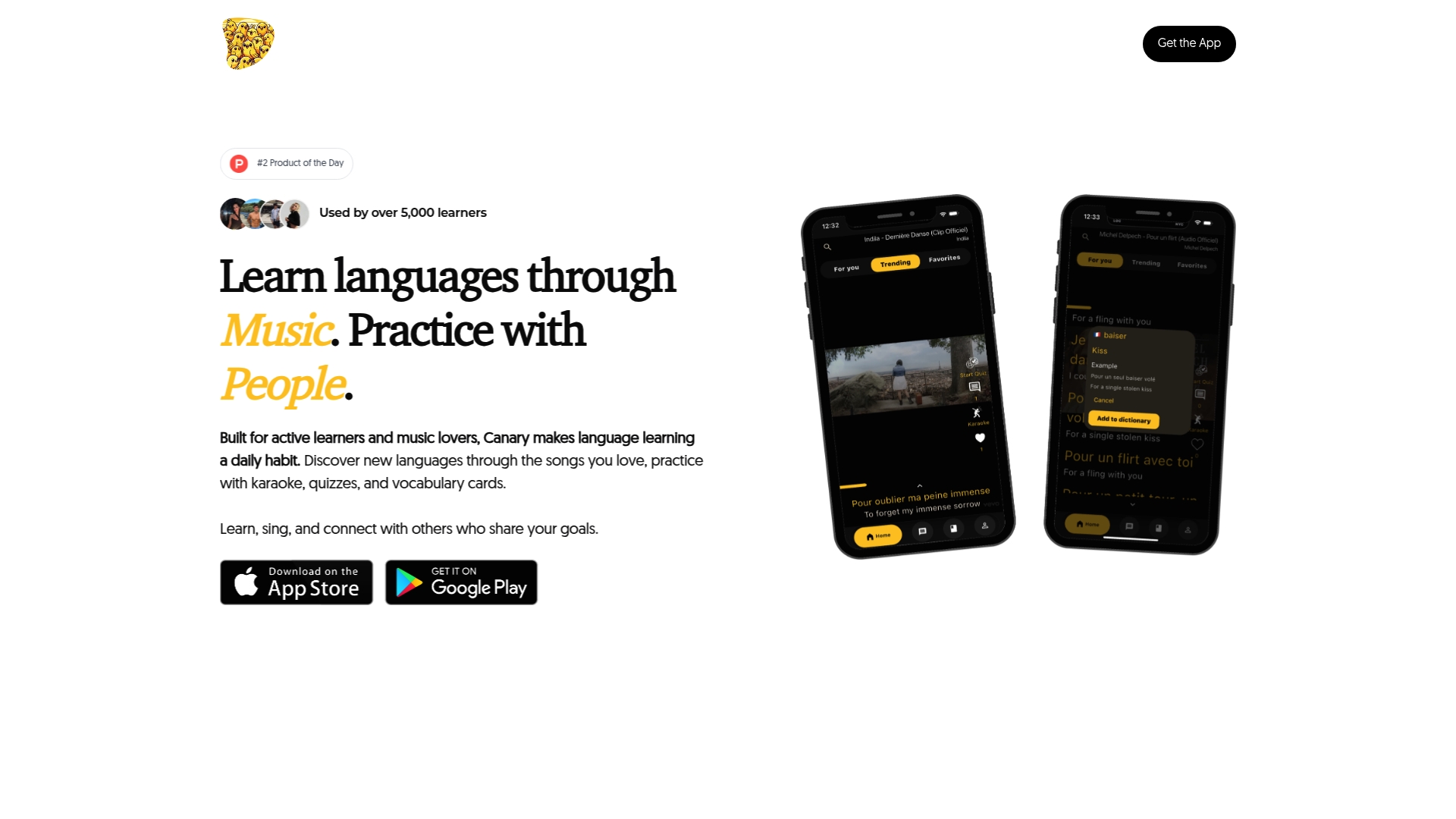
Singwithcanary also connects you with international learners so you can take the vocabulary you build through lyrics straight into real conversation. That is the transition step that turns song knowledge into spoken fluency. Whether you are working on English, Spanish, Italian, or another language, you can learn languages with music in a way that actually sticks. Start your first session today and hear the difference a song makes.
FAQ
What is song lyric immersion in language learning?
Song lyric immersion is an active method where learners engage deeply with song lyrics through reading, analysis, and singing to build vocabulary and pronunciation. It differs from passive listening by requiring deliberate interaction with the text.
How long does it take to see results from lyric immersion?
Structured lyric immersion programs show measurable gains in as few as five lessons, with one study recording listening scores of 92.50 for lyric-based learners versus 53.96 for traditional instruction. Consistent daily practice accelerates results.
What are the best tools for lyric immersion practice?
LyricsTraining, Spotify, YouTube, and Singwithcanary are the most effective platforms. Each supports a different aspect of lyric immersion, from gap-fill exercises to synchronized reading and social speaking practice.
Can lyric immersion hurt my pronunciation if done wrong?
Over-reliance on melody without understanding vocabulary can limit your ability to recognize words in normal speech. Always read lyrics as plain text first and practice speaking the new words outside of the musical context.
How often should i practice lyric immersion?
Short focused sessions of around 10 minutes with active exercises like cloze-filling produce better long-term retention than occasional long sessions. Daily practice, even briefly, outperforms weekly marathon study.