TL;DR:
- Musical practice enhances speech prosody, including rhythm, stress, and intonation, leading to more natural-sounding accents. These prosodic improvements persist over time and are more influential for speech naturalness than phoneme accuracy. Active engagement with singing and rhythmic activities triggers neural and muscular adaptations that deeply embed native-like speech patterns.
Musical practice improves accents by training the brain to better perceive and produce the rhythm, stress, and intonation patterns that define natural-sounding speech. These features, collectively called speech prosody, matter more to perceived accent quality than getting individual sounds exactly right. A 2026 study published in Frontiers in Education confirmed that a multimodal music intervention produced lasting gains in intonation, rhythm, and stress that persisted three months after instruction, with no parallel improvements in phoneme accuracy. Researchers at the University of Talca found that rhythmic sensitivity specifically predicts how well learners perceive and produce English accentuation. Tools like LyricsTraining and acoustic visualization software like Praat are now part of evidence-based accent training programs, and the science behind why accents improve with musical practice is clearer than ever.
What evidence supports music’s role in improving accents?
The strongest recent evidence comes from a 2026 Frontiers in Education study led by researcher Mauricio Véliz at the University of Talca. The study tested a multimodal intervention combining music, gamification, and acoustic visualization with secondary EFL learners. Results showed significant prosodic gains across intonation, rhythm, stress, and overall speech comprehensibility. Those gains held up at a three-month follow-up. That persistence matters because it means the improvements became embedded in how learners speak, not just how they perform on a test.
A separate University of Talca report found that rhythmic sensitivity predicts both the perception and production of English intonation and accentuation. Learners with stronger musical rhythm skills consistently outperformed peers on accent-related speech features. This is not a correlation between general musical talent and language ability. It is a specific link between rhythm processing and the prosodic architecture of speech.
A 2026 mini-review published in Frontiers in Education identified three core mechanisms through which music improves pronunciation: rhythmic-prosodic entrainment, affective regulation, and memory enhancement. Entrainment means your internal timing system synchronizes with the rhythmic patterns in music, and that synchronization transfers to speech. Affective regulation means music reduces anxiety, which frees up cognitive resources for accurate production. Memory enhancement means melodic and rhythmic structures help learners retain prosodic patterns longer than rote repetition does.
“Accent gains often manifest primarily as improved prosodic naturalness and comprehensibility without immediate gains in segmental pronunciation. Learners should value prosodic fluency over phoneme exactness.” — Frontiers in Education, 2026
The table below shows how musical training affects different types of pronunciation gains:
| Type of gain | What improves | Does it persist? |
|---|---|---|
| Prosodic (rhythm, stress, intonation) | Speech flow, comprehensibility, naturalness | Yes, confirmed at 3-month follow-up |
| Phonetic (individual sounds) | Specific vowel or consonant accuracy | Not significantly in music-only interventions |
| Communicative confidence | Willingness to speak, self-efficacy | Yes, alongside prosodic gains |
Pro Tip: If you are evaluating your own accent progress, record yourself reading the same passage every two weeks. Listen for changes in rhythm and sentence melody, not just individual sounds. That is where musical training shows up first.
Why rhythm and prosody matter more than phoneme accuracy
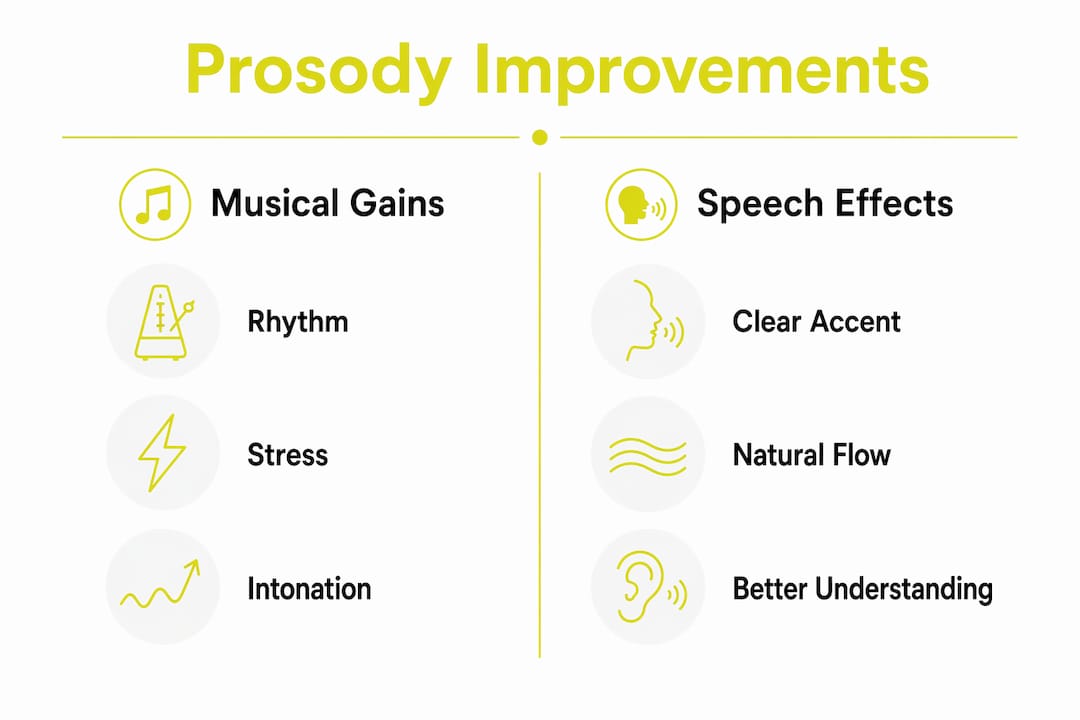
Prosody is the music of speech. It includes three components: rhythm (the timing of stressed and unstressed syllables), stress (which syllables carry weight within words and sentences), and intonation (the rise and fall of pitch across an utterance). When these three elements align with native patterns, listeners perceive the speaker as fluent and easy to understand, even if individual sounds are imperfect.

Neuroscientist Aniruddh Patel’s OPERA hypothesis explains why musical training transfers to speech so effectively. OPERA stands for Overlap, Precision, Emotion, Repetition, and Attention. The hypothesis holds that music and speech share neural processing resources for rhythm and pitch. Because music demands more precise timing and pitch control than everyday speech, musical training sharpens those shared circuits beyond what speech practice alone achieves. The result is a speech system that is better calibrated for prosodic accuracy.
Prosodic entrainment through musical practice reorganizes learners’ internal timing patterns, shifting speech rhythm toward native-like stress-timed patterns. English is a stress-timed language, meaning stressed syllables occur at roughly regular intervals regardless of how many unstressed syllables fall between them. Many learners come from syllable-timed languages like Spanish or French, where every syllable gets roughly equal duration. That mismatch in timing is a primary source of foreign accent perception, and musical rhythm training directly corrects it.
Here is what this means practically for language learners:
- Singing forces you to hold vowels for specific durations, training the muscle memory behind vowel length distinctions.
- Chanting with a beat locks your stress patterns to a rhythmic grid, making stress placement automatic over time.
- Listening to and reproducing melodic contours trains your pitch range and intonation movement.
- Rhythmic movement while speaking, such as tapping or swaying, activates sensorimotor pathways that reinforce timing in production.
Pro Tip: Choose songs with a clear, steady beat and lyrics that match natural speech stress. Artists like Adele, Ed Sheeran, and John Legend are frequently recommended in accent training contexts because their phrasing closely mirrors conversational English prosody.
How different musical activities target specific accent features
Not all musical activities produce the same accent benefits. The type of activity determines which prosodic skill gets trained. Understanding this lets you build a practice routine that targets your specific weaknesses.
- Singing full songs trains vowel duration, pitch movement, and sentence-level intonation simultaneously. It is the most holistic activity for prosodic improvement.
- Chanting and rhythmic repetition isolates stress timing. Repeating phrases to a metronome or drum beat forces you to place stress at consistent intervals, which is the core of stress-timed rhythm.
- Lyric-based retrieval with gamification tools like LyricsTraining promotes high-repetition engagement with authentic speech patterns. The game format increases motivation and the number of exposures per session.
- Acoustic visualization with tools like Praat lets you see your pitch curve and compare it to a native speaker’s. This metacognitive feedback closes the gap between what you think you are producing and what you actually produce.
- Embodied music training, meaning movement synchronized with music, produces stronger speech imitation skills than passive listening. Learners with embodied musical activities performed significantly better at imitating unfamiliar speech sounds than those who only listened.
The table below maps each activity to the prosodic skill it targets most directly:
| Musical activity | Primary prosodic target | Secondary benefit |
|---|---|---|
| Singing full songs | Intonation and pitch movement | Vowel duration and breath control |
| Chanting to a beat | Stress timing and rhythm | Word stress automaticity |
| LyricsTraining (gamified) | Prosodic pattern recognition | Vocabulary and listening comprehension |
| Praat visualization | Metacognitive pitch awareness | Self-correction accuracy |
| Embodied rhythm (movement) | Sensorimotor timing | Speech imitation precision |
The educational benefits of music for language go well beyond entertainment. Each activity above creates a specific neurological and muscular training effect that transfers directly to how you sound when you speak.
How to apply musical practice for real accent gains
The research is clear that passive music listening does not produce significant accent improvement. Short, repeatable, rhythm-focused routines promote procedural consolidation of prosodic features in speech. That means your practice needs to be active, structured, and consistent.
Start by selecting two or three songs in your target language that feature clear pronunciation and natural conversational rhythm. Avoid songs with heavy vocal processing or extreme stylistic distortion of natural speech patterns. Learn the lyrics, then practice singing along while paying attention to where stress falls and how the melody moves between syllables.
Record yourself weekly. Listening back to your own recordings is uncomfortable at first, but it is the fastest way to identify prosodic mismatches. Compare your pitch movement and stress placement to the original track. The gap between what you hear in your head and what the recording reveals is exactly where your training needs to focus.
There is also a perception-production gap that many learners underestimate. Learners may perceive prosodic features correctly but still require targeted production practice to reproduce them naturally. Hearing the right pattern is not enough. You need to physically produce it repeatedly until it becomes automatic.
Combine musical practice with spaced repetition. Revisit the same song or phrase set across multiple sessions spread over days rather than cramming in one long session. Spaced retrieval with lyric-based practice consolidates timing and intonation patterns into procedural memory, which is the type of memory that governs automatic, fluent speech. You can explore song-based learning strategies to find structured approaches that build this habit systematically.
One common misconception is that accent improvement means sounding exactly like a native speaker at the phoneme level. The research does not support that goal as the primary target. Prosodic naturalness, meaning speech that flows with the right rhythm and melody, makes you comprehensible and confident long before you perfect every vowel sound.
Key takeaways
Musical practice improves accents by training prosodic features like rhythm, stress, and intonation, which govern how natural and comprehensible speech sounds far more than phoneme accuracy does.
| Point | Details |
|---|---|
| Prosody drives accent perception | Rhythm, stress, and intonation matter more than individual sound accuracy for sounding natural. |
| Rhythmic sensitivity is the key skill | University of Talca research shows rhythm ability directly predicts accent perception and production gains. |
| Active practice beats passive listening | Singing, chanting, and gamified lyric retrieval produce gains; background music listening does not. |
| Gains persist over time | A 2026 Frontiers in Education study confirmed prosodic improvements held at a three-month follow-up. |
| Target production, not just perception | Learners often hear prosodic patterns correctly before they can produce them; structured practice closes that gap. |
What I have learned from watching learners use music to reshape their accents
I have spent years watching language learners chase phoneme perfection while their rhythm and intonation stay flat. They drill individual sounds obsessively and then wonder why native speakers still struggle to follow them. The research confirms what I have observed directly: comprehensibility lives in prosody, not in perfect vowels.
The learners who improve fastest are the ones who stop trying to sound perfect and start trying to sound rhythmic. They pick songs they actually enjoy, sing them badly at first, and gradually internalize the stress patterns and melodic contours of the language. That process is not glamorous, but it works in a way that phonetic drilling rarely does for natural-sounding speech.
The confidence piece is also real. Learners in music-gamification programs showed measurable increases in communicative self-efficacy alongside their prosodic gains. Confidence is not a soft outcome. It determines whether someone actually speaks in real situations, which is the only place accent improvement gets tested.
My honest recommendation: spend 70% of your pronunciation practice time on rhythm and intonation, and 30% on specific sounds that cause genuine comprehension problems. Sing every day, even for five minutes. Use a tool that gives you visual feedback on your pitch. And stop waiting until your accent is perfect before speaking with real people.
— Ben
Practice accent improvement with Singwithcanary
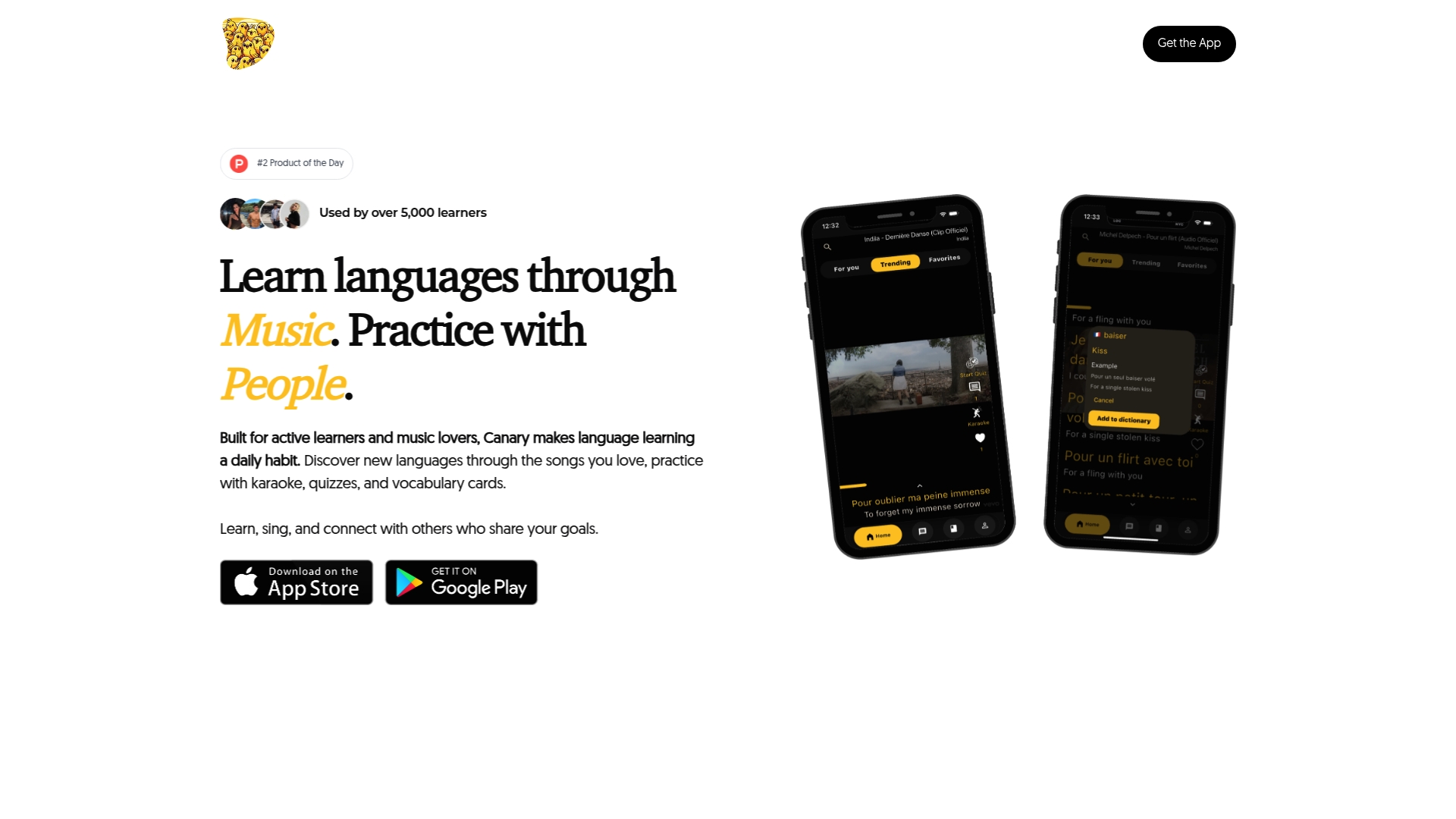
Singwithcanary is built around exactly the mechanisms this article describes. The platform combines lyric-based karaoke practice, vocabulary cards, and interactive quizzes to create the kind of active, repetitive, rhythm-focused engagement that research links to real prosodic gains. Every song session trains your ear and your speech production at the same time, in a format that keeps you coming back daily. If you are ready to put the science into practice, learn languages with music on Singwithcanary and start building the prosodic habits that make accents click. You can also explore how pronunciation powers language learning through music for a deeper look at the timing and pitch mechanics behind accent mastery.
FAQ
Why do accents improve with musical practice?
Musical practice trains the rhythm, stress, and intonation patterns of speech, collectively called prosody, which are the primary drivers of how natural and comprehensible an accent sounds. A 2026 Frontiers in Education study confirmed these prosodic gains persist months after training ends.
Can music change your accent even without formal language lessons?
Yes, but active musical engagement produces the gains, not passive listening. Singing, chanting, and lyric-based retrieval exercises force repeated production of prosodic patterns, which consolidates them into procedural memory for natural speech.
What type of musical practice is most effective for accent improvement?
Embodied activities like singing and rhythmic movement produce stronger results than passive listening. Combining singing with acoustic visualization tools like Praat and gamified platforms like LyricsTraining targets both production and metacognitive awareness simultaneously.
How long does it take to see accent improvement from musical practice?
The 2026 University of Talca and Frontiers in Education research showed measurable prosodic gains within a structured intervention period, with improvements confirmed at three-month follow-up assessments. Consistent daily micro-practice accelerates the timeline significantly.
Does musical training help with all languages or just English?
The core mechanism, rhythmic-prosodic entrainment, applies across languages. However, the specific benefit depends on the rhythmic structure of your target language. Stress-timed languages like English, German, and Russian show the clearest gains from rhythm-focused musical training.