TL;DR:
- Connecting with native speakers helps learners develop natural fluency and cultural understanding faster than classroom instruction. Native conversations enhance pronunciation skills and train the ear to decode real speech patterns, making communication clearer. Combining native speaker interaction with structured teaching offers the most balanced and effective language learning approach.
Connecting with native speakers is the fastest path to real communicative competence in any language. Textbooks teach grammar rules, but they cannot replicate the rhythm, humor, and cultural weight of a live conversation. Research confirms that native speaker interaction produces higher volumes of meaningful language output than classroom instruction alone. This guide explains why connecting with native speakers matters, how it shapes pronunciation and fluency, and how to do it in a way that actually works at every proficiency level.
Why connect with native speakers to build fluency and confidence
Speaking fluency grows fastest when learners stop focusing on rules and start focusing on meaning. Students in native-speaker environments produce higher volumes of language output with a focus on meaning rather than form. That shift from rule-checking to meaning-making is exactly what breaks the hesitation cycle most learners know too well.

The interaction hypothesis, a well-established framework in second language acquisition, explains why this works. Meaningful communication with fluent speakers pushes learners to negotiate meaning in real time, which builds dynamic language use far faster than static grammar drills. When you cannot pause to look up a word, your brain finds a workaround. That workaround becomes fluency.
Native speaker conversations also reduce what researchers call communicative “freezing.” This is the moment when a learner knows the vocabulary but cannot produce a sentence under pressure. Regular exposure to native speech trains your brain to prioritize getting the message across over getting every word perfect.
Key benefits of speaking with natives for fluency include:
- Higher output volume. Real conversations require you to keep talking, which builds stamina and reduces hesitation.
- Negotiation of meaning. When a native speaker does not understand you, you rephrase. That rephrasing is active fluency training.
- Reduced self-monitoring. Frequent native interaction shifts your attention from grammar to communication.
- Natural rhythm acquisition. You absorb sentence stress, pacing, and pausing patterns that no textbook can teach.
Pro Tip: Embrace mistakes as data points, not failures. Native speakers rarely judge learner errors harshly. Interaction shifts focus from perfect mimicry to intelligibility and cultural connection, so your goal is to be understood, not to be flawless.
How does native speaker exposure improve pronunciation?
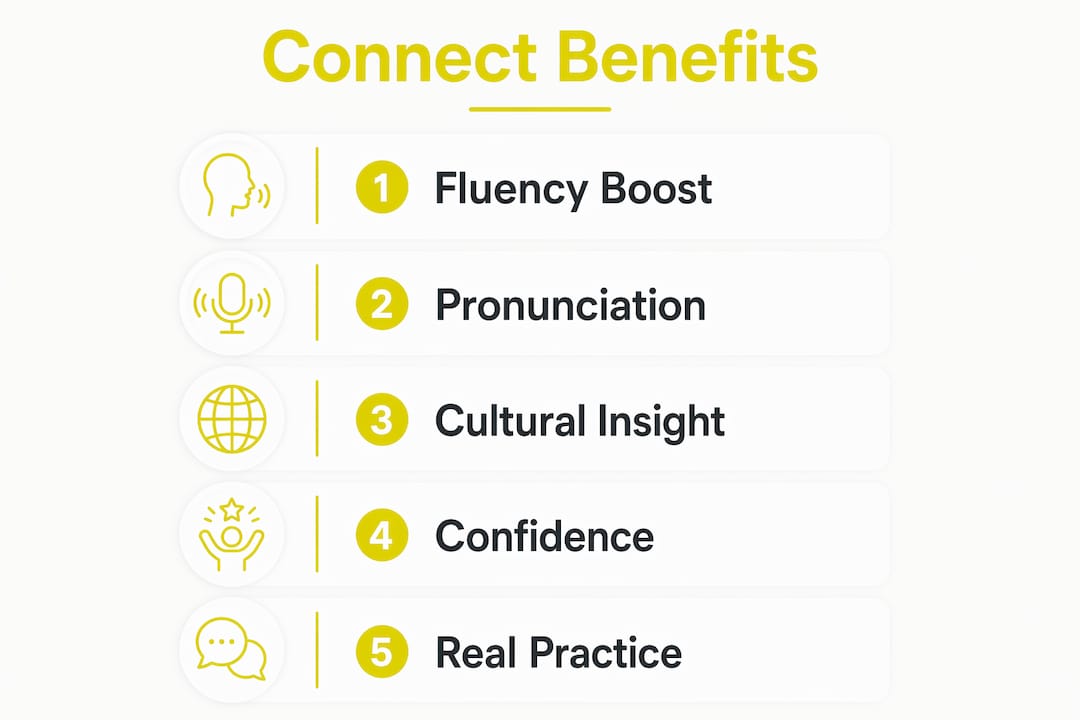
Pronunciation improvement through native speaker exposure works differently than most learners expect. The goal is not a perfect accent. The goal is intelligibility, which means being clearly understood in real conversations, not sounding like a news anchor.
Native speech contains features that textbooks almost never address. Rapid blending, elision, and filler words change how a language actually sounds in daily use. When an American English speaker says “gonna” instead of “going to,” or a French speaker drops syllables in fast speech, a learner trained only on written text will struggle to follow. Regular native conversation builds global language connections and trains your ear to decode these real-speech patterns.
Four specific pronunciation skills develop through native speaker interaction:
- Intonation patterns. Native speakers signal questions, sarcasm, and emphasis through pitch shifts that written language cannot convey.
- Connected speech. Words blend together in natural speech. Hearing this repeatedly trains your ear and your mouth to follow.
- Stress placement. Incorrect word stress is one of the most common causes of misunderstanding. Native feedback corrects this faster than any app.
- Culturally embedded expressions. Idioms, slang, and humor only make sense in context. A native speaker explains them with the cultural weight attached.
Cultural immersion happens naturally through stories, jokes, and shared experiences in native conversation. This is the layer of language learning that no structured course can replicate. When a native speaker laughs at a pun and explains why it is funny, you absorb cultural logic alongside vocabulary.
Should you learn from native or non-native speakers?
The honest answer is both, and the research backs this up clearly. A 2026 Frontiers in Education study found that learners, particularly at lower proficiency levels, appreciate the explicit grammar explanations and shared learning empathy that non-native instructors provide. Non-native teachers have been through the learning process themselves. They know where the confusion lives.
Native speakers bring a different and equally valuable strength. They model authentic fluency, cultural nuance, and natural speech patterns that non-native teachers may not fully replicate. Combining communicative exposure with explicit teaching yields better accuracy and fluency than either approach alone.
Learner preferences also vary by language and proficiency level. Chinese learners prefer native instructors at advanced levels, while Spanish learners show more balanced preferences across proficiency stages. This suggests that the right mix depends on where you are in your learning, not a one-size-fits-all rule.
| Interaction type | Core strength | Best use case |
|---|---|---|
| Native speaker conversation | Authentic fluency, cultural nuance, natural rhythm | Building speaking confidence, pronunciation, idiomatic use |
| Non-native instructor | Grammar clarity, learning empathy, structured explanation | Foundational grammar, error correction, lower proficiency stages |
| Mixed approach | Accuracy and fluency combined | Comprehensive skill development at all levels |
Pro Tip: Use non-native instruction to build your grammatical foundation, then use native speaker conversation to stress-test that foundation in real communication. The two approaches reinforce each other rather than compete.
Practical strategies for connecting with native speakers
The biggest barrier to native speaker interaction is not access. It is the fear of looking foolish. That fear fades fast once you realize that native speakers do not expect perfect language use from learners and often appreciate the effort. Shifting your mindset from “I must speak perfectly” to “I must communicate clearly” changes everything.
Practical ways to practice speaking with native speakers include:
- Language exchange partnerships. Find a native speaker of your target language who wants to learn yours. You each spend half the session in the other’s language. Both parties benefit, and the stakes feel lower.
- Topic-based conversation groups. Join online or in-person groups organized around shared interests like cooking, film, or music. Shared topics reduce the pressure to perform and increase natural conversation flow.
- Structured conversation starters. Prepare two or three open-ended questions before each session. Questions about local customs, favorite expressions, or recent events give native speakers something to talk about enthusiastically.
- Slow-down requests. Ask native speakers to slow down or repeat themselves. Most are happy to help, and the request itself is good language practice.
- Targeted listening before speaking. Watch native-produced content in your target language for 10–15 minutes before a conversation session. This primes your ear and reduces the adjustment period at the start of a call.
- ESL programs with native interaction. Structured programs like the ESL program at AVI Career Training combine formal instruction with native speaker exposure, which is particularly useful for learners who need both structure and real conversation practice.
The most effective learners treat every native speaker conversation as a low-stakes experiment. They try new vocabulary, make mistakes, get corrected, and try again. That cycle is the engine of real fluency.
Key Takeaways
Connecting with native speakers accelerates language acquisition by combining authentic fluency models, cultural immersion, and real-time meaning negotiation in ways that structured instruction alone cannot replicate.
| Point | Details |
|---|---|
| Fluency through meaning | Native conversations shift focus from grammar rules to communication, breaking the hesitation cycle. |
| Pronunciation and intelligibility | Native exposure trains your ear for connected speech, intonation, and cultural expressions. |
| Balance native and non-native input | Non-native teachers build grammar foundations; native speakers stress-test them in real conversation. |
| Learner preferences vary | Advanced learners often benefit most from native interaction; beginners gain more from structured non-native instruction. |
| Mindset over perfection | Native speakers value effort and intelligibility, not flawless grammar, so embrace mistakes as part of the process. |
What I’ve learned from real conversations that no classroom taught me
My clearest language breakthrough did not happen in a classroom. It happened in a kitchen in Seville, trying to explain why I was late for dinner and realizing I had no idea how to express mild embarrassment in Spanish. The grammar I knew was fine. The cultural register was completely wrong. A native speaker corrected me with a laugh, not a red pen, and I never forgot that phrase.
That experience taught me something the research confirms but rarely says plainly: native speakers teach you how to be a person in a language, not just a speaker of it. You learn when to be formal, when to joke, when silence is polite, and when it is rude. None of that lives in a textbook.
The bias known as “native-speakerism,” the assumption that only native speakers make credible language teachers, is shifting as non-native speakers are recognized as credible, empathetic language models. That shift is healthy. The best learning happens when you combine the cultural authenticity of native interaction with the structured clarity of a teacher who has walked the same learning path you are on.
My honest advice: stop waiting until you are “ready” to talk to native speakers. You will never feel ready. The conversation itself is what makes you ready.
— Ben
Singwithcanary: practice with native speakers through music
Singwithcanary combines music and social interaction to make native speaker practice feel natural rather than nerve-wracking. The platform uses song lyrics, karaoke, and vocabulary cards to build the kind of ear training and pronunciation awareness that native conversations demand.
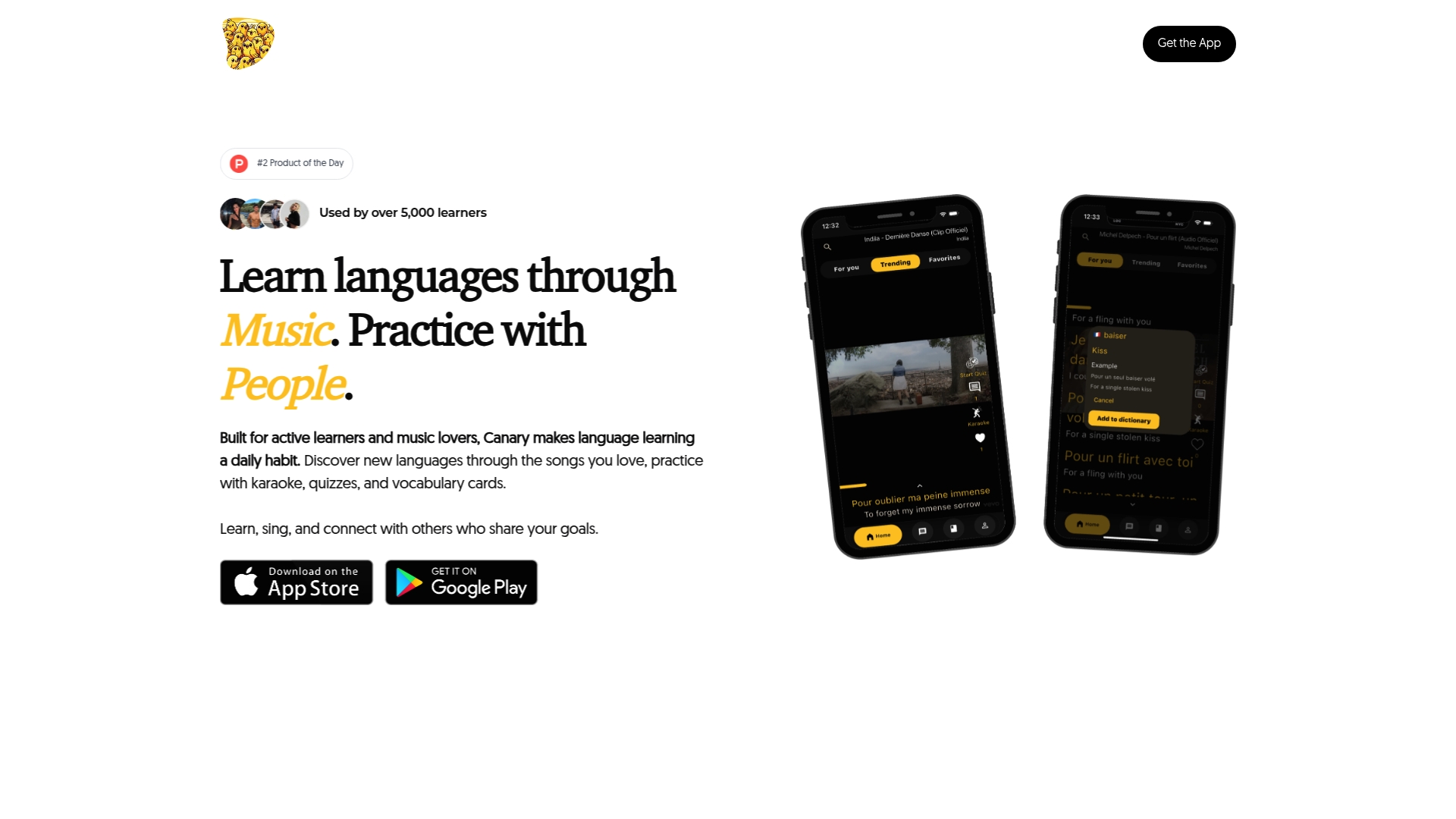
Learners at every proficiency level can learn languages with music while connecting with an international community of speakers. The music-first approach removes the pressure of formal conversation and replaces it with something you actually want to do every day. If you are ready to move beyond drills and into real cultural immersion, Singwithcanary is built for exactly that. Check out apps for practicing with natives to see how the platform fits into a broader native speaker practice routine.
FAQ
Why is connecting with native speakers important for language learners?
Native speaker interaction builds communicative competence, authentic pronunciation, and cultural understanding that structured instruction alone cannot provide. Research shows learners produce more language output and develop natural fluency faster through real native conversations.
How do native speakers help with pronunciation?
Native speakers model connected speech, intonation, and natural rhythm, including blending and elision, that textbooks rarely address. Regular exposure trains your ear to decode real speech and improves intelligibility over time.
Should beginners talk to native speakers right away?
Beginners benefit most from non-native instructors who provide clear grammar explanations and learning empathy. Adding native speaker practice as early as possible, even briefly, accelerates the transition from rules-based to meaning-based communication.
What is the best way to engage with native speakers online?
Language exchange partnerships, topic-based conversation groups, and music-driven platforms like Singwithcanary are all effective ways to engage with native speakers regularly without high pressure.
Do native speakers judge learners for making mistakes?
Native speakers generally do not expect perfect language use from learners and appreciate the effort to communicate. The focus shifts from grammatical accuracy to intelligibility and cultural connection, which makes mistakes a normal and productive part of every conversation.