TL;DR:
- Practicing speaking with native speakers accelerates fluency by forcing real-time word retrieval, cultural understanding, and immediate feedback. Engaging in short, task-based sessions combines authentic pressure with structured goals, leading to faster progress than passive study alone. Early native interaction, complemented by peer practice and AI tools, helps learners overcome fears and build confidence in authentic communication.
Practicing speaking with native speakers is defined as engaging in real-time conversations with fluent, first-language users to develop natural communication skills that textbooks and apps cannot replicate. This is the single most direct path to fluency because it forces your brain to retrieve words under pressure, process authentic accents, and respond without a script. Grammar drills and vocabulary apps build a foundation, but they leave a gap between knowing a language and actually speaking it. Native speaker interaction, known formally as communicative language practice, closes that gap faster than any other method. If you want to understand why practice speaking with natives matters, the answer is measurable: speed, accuracy, and cultural depth all improve at a rate passive study cannot match.
Why practicing with native speakers accelerates language skills
The core advantage of native speaker conversations is speed of processing. Real-time speaking forces active vocabulary use instead of translation, which is the exact mechanism that builds fluency. When you study alone, you recognize words. When you speak with a native, you must produce them instantly. That difference is everything.

Regular interaction with native speakers can reduce word-retrieval time to under 0.5 seconds and accelerate B2 conversational fluency within 6 to 12 months. That benchmark matters because B2 is the level where you can hold a real conversation without constant pauses or mental translation. No app-only method produces that result in the same timeframe.
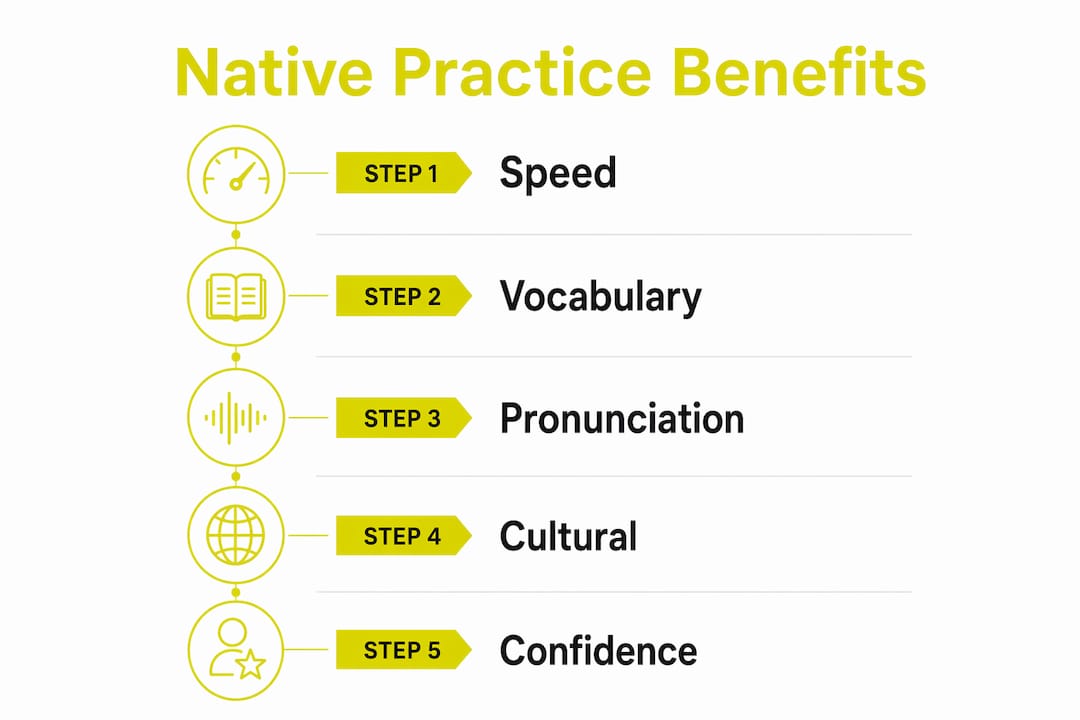
The benefits of speaking with natives go beyond speed. Here is what changes specifically:
- Pronunciation and intonation. Native speakers use contractions, reductions, and natural rhythm that recorded audio rarely captures. Hearing “gonna,” “wanna,” and “didja” in context trains your ear faster than any pronunciation drill.
- Immediate error correction. A native speaker reacts in real time. When you use the wrong preposition or an unnatural phrase, their response signals the mistake before it becomes a habit.
- Vocabulary in context. You learn which words actually get used versus which ones exist only in textbooks. “Commence” is correct English. “Start” is what people say.
- Thinking in the target language. After enough native conversations, the internal translation step disappears. You stop converting from your first language and begin generating directly in the new one.
Pro Tip: Before each session with a native speaker, write down three phrases you want to use naturally. This small preparation converts passive vocabulary into active speech within a single conversation.
A hybrid practice routine combining 20 minutes of AI-simulated practice with 10 minutes of native speaker interaction advances learners 2 to 3 times faster than app-only methods. That ratio is worth noting: the AI builds confidence and corrects mechanics, while the native conversation delivers the authentic pressure that produces real fluency. Social interaction supercharges language acquisition in ways that solo study simply cannot.
What role does culture play in native speaker practice?
Language is not a code. It is a social behavior, and native speakers provide cultural context, tone, and emotional cues that machines and textbooks cannot teach. When a Brazilian Portuguese speaker says “saudade,” the word carries longing, nostalgia, and a specific cultural worldview. A dictionary definition gives you the translation. A native speaker gives you the feeling.
This cultural depth changes how you communicate in four concrete ways:
- Idiomatic fluency. Idioms are not logical. “Break a leg,” “hit the sack,” and “bite the bullet” make no literal sense. Native speakers use them constantly, and only real conversation teaches you when and how to deploy them without sounding awkward.
- Tone and register. Knowing when to be formal, casual, or playful is a cultural skill. A native speaker signals these shifts naturally, and you absorb them through exposure.
- Reduced perfectionism. Conversations with natives shift your focus from grammar accuracy to communication success. That mindset change is significant. Perfectionism is the most common reason learners stall.
- Sustained motivation. Genuine human connection makes practice enjoyable. Enjoyable practice becomes a habit. Habits produce fluency.
“Speaking with natives transforms language from a set of rules into a lived experience. The human connection is what makes the difference between knowing a language and actually living it.” — NaTakallam
The anxiety reduction that comes from practicing with native speakers is not a soft benefit. It is a measurable factor in retention and progress. Learners who enjoy their practice sessions show up more consistently, and consistency is the actual driver of fluency.
How to structure effective sessions with native speakers
Unstructured conversation is better than no conversation, but structured conversation is significantly better than unstructured. Task-based practice with defined objectives keeps sessions productive and prevents the plateau that hits most learners after the beginner stage.
Here is a practical framework for structuring your sessions:
- Set a specific task before you start. Role-play a job interview, describe a photo, tell a story from your week, or debate a simple topic. The task gives both speakers a shared goal and prevents the conversation from drifting into comfortable, repetitive territory.
- Keep sessions short and intense. Short, focused sessions of 20 to 30 minutes produce better fluency gains than long, low-intensity conversations. Cognitive engagement drops sharply after 30 minutes of speaking in a second language.
- Request specific feedback. Ask your native partner to note three errors at the end of the session. This creates a feedback loop that tracks your progress and targets your weakest patterns.
- Combine native practice with AI or peer sessions. Use AI conversation tools for mechanics and confidence, then bring that confidence into your native speaker session for authentic pressure.
- Review and repeat. After each session, write down new phrases, corrections, and vocabulary. Revisit them before the next conversation.
Pro Tip: Record your sessions with permission and listen back at 1.25x speed. You will catch hesitation patterns and filler words you never notice in the moment.
| Practice method | Best use case | Limitation |
|---|---|---|
| Native speaker conversation | Authentic fluency, cultural context, real-time pressure | Can create anxiety; limited availability |
| AI conversation tools | Unlimited repetition, mechanics, low-stakes correction | No cultural nuance or emotional connection |
| Peer-to-peer practice | Confidence building, safe environment, mutual support | May reinforce shared errors |
| Task-based structured sessions | Measurable progress, plateau prevention | Requires preparation and clear goals |
Improving pronunciation specifically benefits from this structured approach because native speakers model natural prosody that you can target deliberately within each session.
What are the misconceptions about practicing only with natives?
The most common misconception is that native speakers are the only valid practice partners. Focusing exclusively on native speakers ignores approximately 75% of real-world English communication, which happens between non-native speakers. If your goal is to communicate globally, you need exposure to multiple accents and speaking styles, not just native ones.
Fear of judgment is the second major barrier. Many learners delay native practice because they feel their level is not high enough. This is a costly mistake. Early exposure to native speakers prevents fossilized pronunciation errors that become extremely difficult to correct later. The discomfort of early native conversations is far less painful than relearning ingrained mistakes at an advanced level.
Peer-to-peer practice reduces anxiety and builds confidence in a supportive environment where both speakers share the experience of learning. That psychological safety is not a consolation prize. It is a necessary stage for many learners before they are ready to maximize native speaker sessions. The goal is a balanced approach: peer practice for confidence, AI tools for mechanics, and native conversations for authentic fluency. Platforms like italki and NaTakallam connect learners with native speakers across languages and skill levels, making access easier than it has ever been.
Key takeaways
Native speaker interaction accelerates fluency because it combines real-time pressure, cultural context, and immediate feedback in a way no other method replicates.
| Point | Details |
|---|---|
| Speed of word retrieval | Regular native practice reduces response latency to under 0.5 seconds, a benchmark passive study cannot achieve. |
| Cultural depth | Natives teach tone, idioms, and emotional register that textbooks and AI tools cannot replicate. |
| Structured sessions work best | Task-based conversations of 20 to 30 minutes produce measurably better results than long, unstructured chats. |
| Hybrid approach wins | Combining AI practice with native conversations advances learners 2 to 3 times faster than app-only methods. |
| Start early, not perfectly | Early native exposure prevents fossilized errors; waiting until you feel “ready” costs more than it saves. |
The real reason most learners avoid native conversations
I have worked with language learners long enough to recognize the pattern: the people who make the fastest progress are not the ones with the best grammar. They are the ones who treat every native conversation as an exchange rather than a test. That reframe is harder than it sounds, but it is the actual variable that separates learners who plateau from those who break through.
The conventional advice is to study more before speaking. I think that gets it backwards. The biggest learning hurdle is converting knowledge into speech, and that conversion only happens under real communicative pressure. You cannot study your way into fluency. You have to speak your way there.
What I have found works is starting native practice earlier than feels comfortable, keeping sessions short enough to stay mentally sharp, and combining that pressure with lower-stakes practice in between. The learners who combine interactive speaking practice with native conversations consistently outperform those who rely on a single method. The hybrid approach is not a compromise. It is the strategy.
One more thing: quality matters more than frequency. A focused 25-minute session with a clear task and a feedback loop beats three hours of casual chatting every time. Task-based practice with clear goals leads to measurable improvement. That is not a theory. It is what the research shows and what I have seen consistently in practice.
— Ben
Practice speaking with natives using Singwithcanary
Singwithcanary combines music-driven language learning with real social interaction, giving you a daily practice environment that makes native speaker conversations feel natural rather than intimidating.
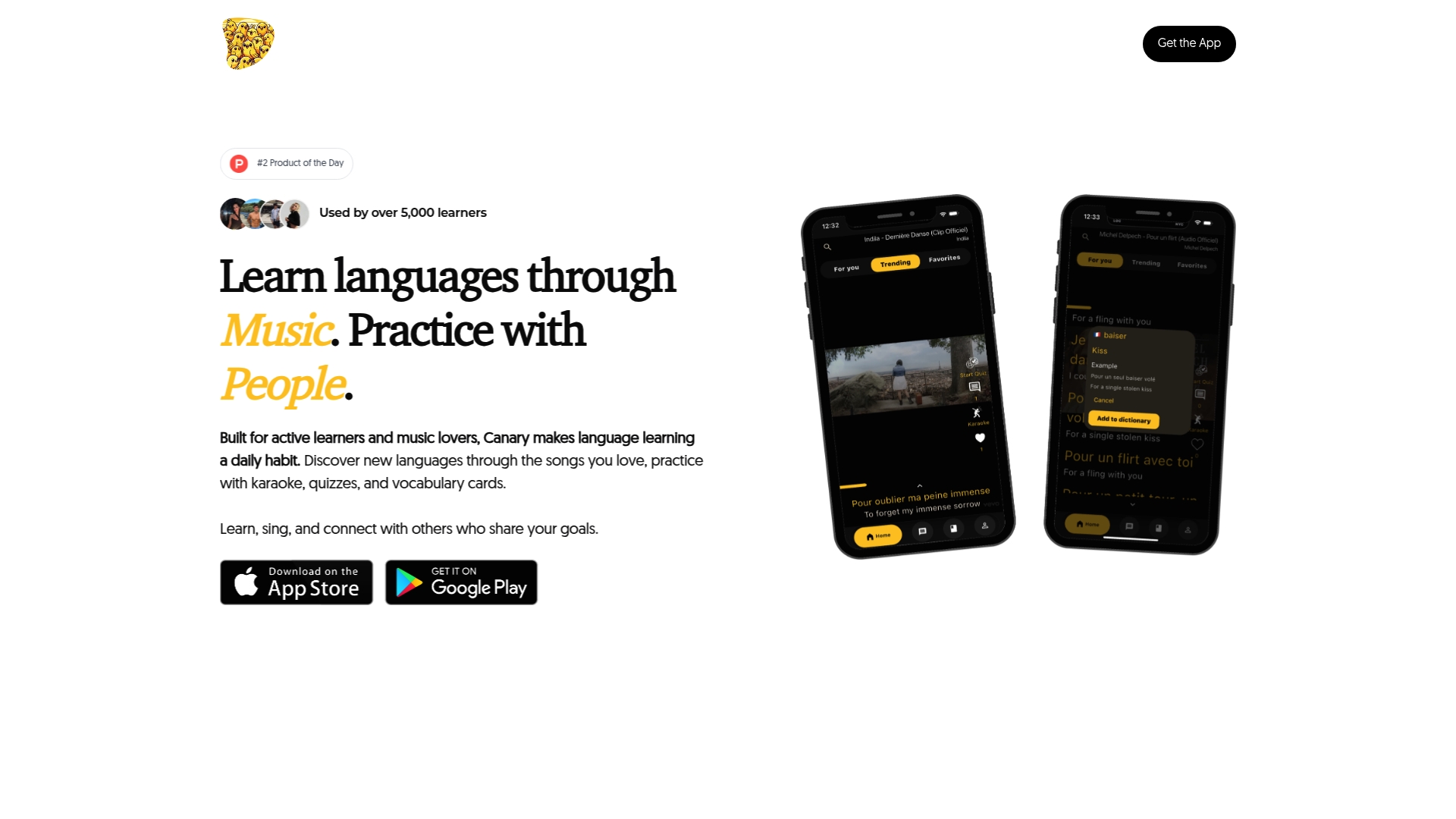
The platform pairs song-based vocabulary and pronunciation training with a community of international learners and native speakers. You build the ear training and cultural familiarity through music, then bring that confidence into real conversations. Singwithcanary’s karaoke features, vocabulary cards, and quiz tools prepare you for the exact kind of authentic dialogue that produces fluency. If you want to learn languages with music and connect with native speakers in a format that actually sticks, Singwithcanary is built for that. Explore the best apps for practicing with natives to see how Canary fits into your learning routine.
FAQ
Why is speaking with native speakers better than studying alone?
Speaking with natives forces real-time word retrieval and exposes you to authentic accents, idioms, and cultural context that self-study cannot replicate. It converts passive knowledge into active speech, which is the core mechanism of fluency.
How long should a practice session with a native speaker be?
Sessions of 20 to 30 minutes with a specific task or goal produce better fluency gains than longer, unfocused conversations. Cognitive engagement drops after 30 minutes of speaking in a second language, so shorter and more intense beats longer and casual.
Is it okay to practice with non-native speakers too?
Peer-to-peer practice with other learners builds confidence and reduces anxiety in a supportive environment. Approximately 75% of real-world English communication happens between non-native speakers, so diversifying your practice partners reflects how language actually gets used.
When should I start speaking with native speakers?
Start earlier than feels comfortable. Early exposure prevents fossilized pronunciation errors that become very difficult to correct at advanced levels. Waiting until you feel “ready” is the most common and costly delay in language learning.
How do I find native speakers to practice with?
Platforms like italki, NaTakallam, and Singwithcanary connect learners with native speakers across languages and skill levels. Structured language exchange communities and international connections also provide consistent access to authentic conversation partners.