TL;DR:
- Interactive language platforms accelerate fluency through real-time feedback, personalized practice, and active engagement. Studies show rapid improvements in oral proficiency, grammar, and vocabulary within short time frames, often outperforming passive learning methods. Choosing the right platform based on pedagogical design, and consistently practicing productive language use, enhances long-term retention and confidence.
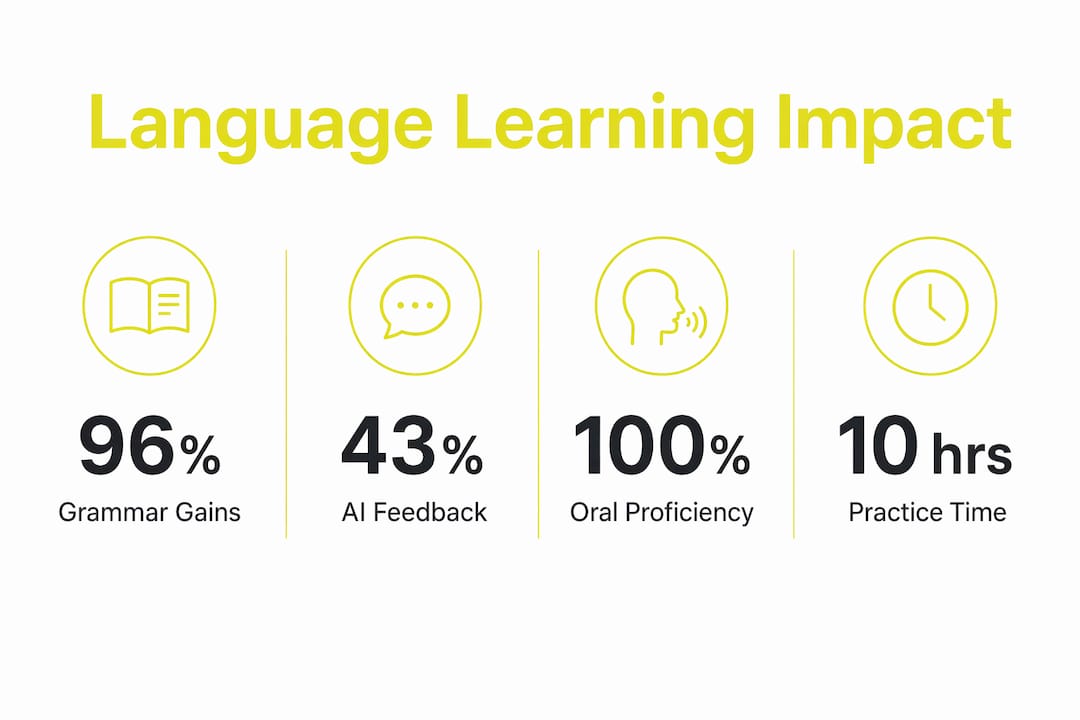
Interactive language platforms are defined as digital environments that combine real-time feedback, personalized practice, and communicative tasks to accelerate language acquisition beyond what passive study can achieve. If you have ever spent months with a textbook and still froze when a native speaker said hello, you already understand the gap these platforms close. Tools like Babbel and italki have demonstrated that structured, interactive engagement produces measurable gains fast. 100% of participants improved oral proficiency within three months using interactive lessons. That single figure explains why so many learners are asking why use interactive language platforms instead of traditional methods.
Why use interactive language platforms for real skill gains
The research case for interactive language learning is not subtle. It is direct and consistent across multiple studies. 96% of learners improved grammar and vocabulary after just 10 hours of interactive practice. Ten hours is less than a weekend. That rate of return is impossible to match with passive reading or lecture-style instruction.

AI-driven feedback adds another layer of precision. 43.3% of learners using AI-supported feedback advanced at least one full CEFR level. Moving up a CEFR level represents months of progress by traditional standards. The speed difference comes from one core mechanism: immediate correction before a mistake becomes a habit.
A meta-analysis of 33 studies confirms that one-on-one interactive settings produce superior long-term retention and measurable accuracy gains over passive study. The reason is active participation. When you produce language under real-time conditions, your brain encodes it differently than when you simply read or listen.
| Research Finding | Result | Source |
|---|---|---|
| Oral proficiency improvement | 100% within 3 months | Babbel interactive lessons |
| Grammar and vocabulary gains | 96% after 10 hours | Babbel interactive lessons |
| CEFR level advancement | 43.3% gained one level | AI-supported feedback study |
| Long-term retention | Superior in one-on-one settings | Meta-analysis of 33 studies |
Pro Tip: Track your CEFR level at the start of any new platform. Reassess after 10 hours of active practice. The data will show you whether the platform is actually moving the needle.
What are the core advantages over traditional methods?
Traditional language training fails most learners because it focuses on theory over practice. Grammar drills and vocabulary lists build knowledge about a language, not the ability to use it. Interactive scenarios improve communication skills transfer better than grammar drills alone. The shift from knowing rules to applying them in context is where fluency actually lives.
The advantages of interactive language tools go well beyond speed of acquisition. Here is what separates them from conventional approaches:
- Anxiety reduction. Interactive platforms reduce foreign language anxiety by giving learners a safe space to make mistakes without judgment. That psychological safety is what allows risk-taking, and risk-taking is what builds communicative confidence.
- Contextual learning. Simulated real-world scenarios teach you how language actually works in conversation, not just how it looks on a page. You learn to order food, negotiate, and express opinions, not just conjugate verbs.
- Higher practice frequency. Learners on interactive platforms practice more often because the experience is engaging. Motivation is not a personality trait. It is a product of the environment you put yourself in.
- Personalized pacing. Unlike a classroom, interactive platforms adapt to your proficiency level. You are never bored by content that is too easy or lost in content that is too hard.
- Productive output focus. Productive output drives real fluency gains in ways that passive input cannot replicate. Speaking and writing under real-time conditions force your brain to retrieve and apply language actively.
Pro Tip: When you start a new platform, turn off the option to skip speaking exercises. The discomfort you feel in those first sessions is exactly where the growth happens.
How do different interactive approaches compare?
Not all interactive language resources deliver the same experience. The technology and pedagogical design behind a platform shape what you actually learn and how fast. Understanding the differences helps you choose the right tool for your specific goal.
AI chatbots
AI chatbots provide immediate corrective feedback and personalized conversation practice tailored to your proficiency level. They are available at any hour and never lose patience. The limitation is that they lack the cultural nuance and spontaneity of a real human conversation partner.
Live one-on-one tutoring
Platforms like italki connect learners with human tutors for live sessions. The meta-analysis evidence is clear: one-on-one interactive instruction produces the strongest long-term retention. Human tutors catch errors that AI systems miss and provide cultural context that no algorithm fully replicates.
Gamified platforms
Gamification boosts motivation but only when the design keeps learning objectives front and center. Points, streaks, and leaderboards can drive daily habits. They can also distract learners into optimizing for game mechanics rather than actual language use. The difference lies in whether the platform is goal-centered or entertainment-centered.
Immersive VR environments
Immersive VR builds presence and lowers psychological barriers to language use. When your brain believes you are in a Paris café, it activates the same cognitive and emotional responses as being there. VR is the closest technology has come to replicating full immersion without a plane ticket.
| Approach | Key Strength | Best Use Case | Watch Out For |
|---|---|---|---|
| AI Chatbots | Instant feedback, always available | Daily grammar and speaking drills | Lacks cultural spontaneity |
| Live Tutoring | Strongest retention, human nuance | Speaking confidence and fluency | Scheduling and cost |
| Gamified Platforms | High engagement, habit formation | Building a daily practice routine | Distraction from real goals |
| Immersive VR | Presence, low anxiety, full context | Simulated real-world scenarios | Hardware cost and access |
How to choose and maximize an interactive language platform
Choosing a platform is not about finding the most popular app. It is about matching the platform’s design to your specific learning goal. Pedagogical intentionality, not technology novelty, determines whether a platform actually builds fluency. Here is how to evaluate and use any interactive platform effectively:
-
Define your communicative goal first. Are you learning to travel, work, or connect with family? Your goal determines which skills to prioritize. A platform heavy on reading comprehension will not prepare you for a job interview in Spanish.
-
Prioritize platforms that require speaking and writing. Fluency derives from productive language use under real-time conditions. If a platform lets you progress by only tapping multiple-choice answers, it is training recognition, not production.
-
Check for structured communicative objectives. The best platforms build lessons around tasks you would actually perform in real life. Look for role-play scenarios, open-ended speaking prompts, and writing exercises with feedback, not just fill-in-the-blank drills.
-
Seek immediate feedback loops. Immediate corrective feedback before mistake habituation is critical for rapid improvement. If a platform only tells you whether you got something right or wrong without explaining why, find a better one.
-
Integrate platform practice with real-world use. No platform alone produces fluency. Use what you practice on the platform in actual conversations as soon as possible. Even a five-minute exchange with a language partner reinforces what the platform taught you far more than another session on the app.
-
Monitor progress with measurable benchmarks. Set a CEFR level target and track it. Use speaking recordings to compare your pronunciation month over month. Data removes guesswork and keeps you honest about whether your current approach is working.
You can explore how music-based interactive methods fit into this framework as a way to add variety and cultural depth to your practice routine.
Key takeaways
Interactive language platforms outperform traditional methods because they combine real-time feedback, productive output, and low-anxiety practice environments that accelerate measurable fluency gains.
| Point | Details |
|---|---|
| Speed of skill gains | 96% of learners improved grammar and vocabulary after just 10 hours of interactive practice. |
| AI feedback effectiveness | AI-supported platforms moved 43.3% of learners up at least one full CEFR level. |
| Anxiety and confidence | Safe, low-risk environments allow the risk-taking that builds real communicative confidence. |
| Productive output matters | Speaking and writing under real-time conditions drive fluency; passive input alone does not. |
| Pedagogical design is decisive | Goal-centered structure, not technology novelty, determines whether a platform builds lasting skills. |
What i have learned after years of watching learners struggle and succeed
I have watched hundreds of learners cycle through the same frustrating pattern. They spend months on grammar workbooks, score well on written tests, and then completely freeze in a real conversation. The problem is not intelligence or effort. The problem is that passive study trains a different skill than speaking.
The first time I saw a learner use an interactive platform with real-time speaking feedback, the difference was obvious within weeks. Not months. Weeks. The platform forced her to produce language, not just recognize it. She made mistakes constantly, and the system corrected her immediately. That feedback loop, repeated hundreds of times, rewired her instincts faster than any textbook could.
What I find most underrated about interactive platforms is the anxiety piece. Most learners do not talk about it, but fear of embarrassment in front of native speakers is one of the biggest reasons people quit. A platform that lets you fail privately, without judgment, removes that barrier entirely. You build confidence in a controlled space and then carry it into real conversations.
My honest advice: do not chase the flashiest app. Chase the one that makes you speak and write the most, corrects you immediately, and keeps you coming back tomorrow. Technology is only as good as the pedagogical design behind it. The research on instructional design backs this up consistently. Find a platform built around what you need to do, not just what feels fun to click.
— Ben
Learn languages the way your brain actually wants to
Singwithcanary is built on the same principles the research supports: active production, real-time feedback, and low-anxiety practice. The platform combines song-based learning with karaoke, vocabulary cards, and quizzes so you practice pronunciation, vocabulary, and listening all at once. Music is not a gimmick here. It is a proven memory anchor that makes new words stick faster and longer.
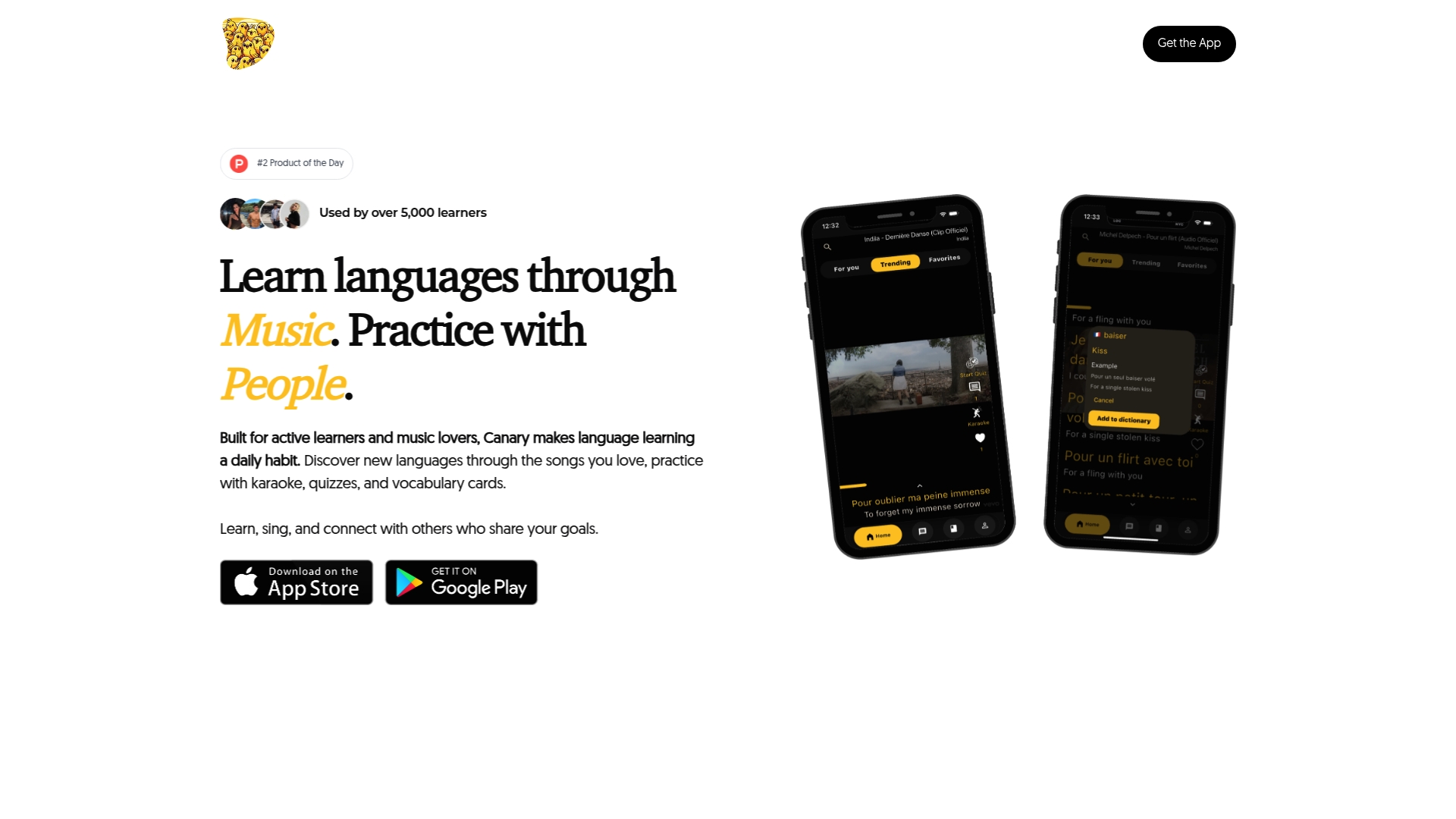
Singwithcanary also connects you with international learners so your practice never stays theoretical. You move from singing a lyric to using that phrase in a real conversation with someone across the world. If you are ready to learn languages with music and build the kind of fluency that holds up in real life, Singwithcanary is where that practice starts.
FAQ
What makes interactive language platforms more effective?
Interactive platforms require you to produce language in real time, which builds fluency faster than passive study. Research shows 100% of participants improved oral proficiency within three months using interactive lessons.
How do interactive apps reduce language anxiety?
Interactive platforms provide safe, low-risk environments where learners can make mistakes without fear of judgment. That psychological safety encourages the risk-taking that builds real communicative confidence over time.
Are AI chatbots good for language learning?
AI chatbots deliver immediate corrective feedback and personalized conversation practice at any hour. They are most effective for daily drilling and grammar correction, though they work best when combined with human interaction for cultural nuance.
How many hours before i see real progress?
Research shows 96% of learners see measurable grammar and vocabulary improvement after just 10 hours of interactive practice. Consistent daily sessions of 20–30 minutes reach that threshold within three weeks.
Does gamification actually help you learn a language?
Gamification increases motivation and daily practice frequency, but only when the platform keeps learning objectives central. Goal-centered gamification builds habits; entertainment-centered gamification can distract from actual language production.