TL;DR:
- Building a daily language habit relies on consistent practice focused on input, recall, and vocabulary review. Anchoring practice to existing routines helps sustain motivation and makes habits automatic, especially with tools like Anki, iTalki, and music. Short sessions of 20 to 45 minutes and a flexible minimum habit of 3-5 minutes support long-term fluency and consistency.
A daily language habit is the single most reliable path to fluency. Not talent, not expensive courses, not immersion trips. Consistent, repeatable practice built into your existing routine produces results that sporadic marathon sessions never will. This guide to building daily language habits covers the research-backed structure, behavioral science, and practical tools you need to make language learning stick. Whether you use Anki for spaced repetition, shadowing for speaking fluency, or music through platforms like Singwithcanary, the system matters more than the hours.
What is the best guide to building daily language habits?
The most effective daily language habit combines three activity types: input, active recall, and vocabulary review. Experts recommend 20–45 minutes of daily practice as the sustainable sweet spot. That range is long enough to make real progress and short enough to repeat every single day without burning out.
Here is a practical session breakdown that works for most learners:
- 10–15 minutes of listening or reading (podcasts, native content, graded readers)
- 15 minutes of spaced repetition using tools like Anki or the Ling app
- 10 minutes of speaking or shadowing to activate what you have absorbed
This structure mirrors what a 90-day science-backed plan recommends: stack input, vocabulary review, and speaking into one focused session. Short, frequent sessions consistently outperform long weekend cramming. Your brain consolidates language during sleep, so daily exposure gives it more material to work with.
Pro Tip: Split your session into two blocks if 30 minutes feels hard to find. Do vocabulary review in the morning and shadowing at night. Retention improves when you space practice across the day.

How does habit stacking help you practice languages daily?
Habit stacking is the practice of attaching a new behavior to an existing one. The behavioral science term for this is “implementation intention.” Instead of scheduling language practice at an arbitrary time, you anchor it to something you already do automatically.

Anchoring new language practice to existing daily triggers builds associative neural pathways that make the habit easier to maintain even on low-energy days. That is the key insight. You are not relying on motivation. You are borrowing the momentum of a habit you already have.
Strong anchor habits for language practice include:
- Morning coffee: Run Anki flashcards while your coffee brews
- Commute: Listen to a target-language podcast or shadowing audio
- Lunch break: Read one short article or watch a two-minute video clip
- Bedtime: Review five vocabulary cards or write three sentences in your target language
The specific anchor matters less than the consistency of the trigger. Write your implementation intention as a concrete sentence: “After I pour my morning coffee, I will open Anki and review 10 flashcards.” That specificity is what makes it stick.
Pro Tip: The “never miss twice” rule is your safety net. Missing one day is a slip. Missing two days in a row is the start of a broken habit. Return to your regular routine the next day without doubling up.
Which tools support an effective language practice routine?
The right tools reduce friction and keep practice engaging. Below is a comparison of the most widely used options for daily language learners.
| Tool | Best for | Format | Cost |
|---|---|---|---|
| Anki | Vocabulary via spaced repetition | Flashcard app | Free |
| Ling app | Gamified daily lessons | Mobile app | Freemium |
| iTalki | Live conversation with tutors | Video sessions | Pay per lesson |
| Preply | Structured tutoring with progress tracking | Video sessions | Subscription |
| Singwithcanary | Music-based vocabulary and pronunciation | Songs, karaoke, quizzes | Freemium |
Spaced repetition software targets words on the verge of being forgotten, which maximizes retention while cutting wasted review time. Learners who add 10–20 flashcards daily reach a review load of 150–250 cards within 30 days. That translates to roughly 15–25 minutes of daily review, which fits neatly into the recommended session structure.
Music is an underused tool for building a daily language practice routine. Songs expose you to natural rhythm, pronunciation, and vocabulary in context. Singwithcanary combines karaoke, vocabulary cards, and quizzes built around song lyrics, making it easy to practice pronunciation and ear training without it feeling like study.
Speaking out loud from the start, even to yourself or through shadowing, activates real language use. Shadowing audio material daily significantly improves accent, rhythm, and speaking speed, accelerating oral fluency faster than passive listening alone.
Pro Tip: Combine a spaced repetition app like Anki with a live conversation tool like iTalki once a week. The flashcards build your vocabulary bank. The conversation forces you to retrieve it under pressure. That combination overcomes speaking fear faster than either method alone.
How do you troubleshoot a language habit that keeps breaking?
Motivation dips are not a character flaw. They are a predictable part of any long-term habit. The solution is not more willpower. It is a smaller minimum.
The “minimum viable habit” concept means doing the absolute smallest amount of practice on your hardest days. That could be as little as 3–5 minutes or one quick lesson. The goal on those days is not progress. It is preserving the identity of someone who practices every day.
Common obstacles and how to handle them:
- “I missed a day and feel like giving up.” Apply the never-miss-twice rule. One missed day does not break a habit. Two in a row starts to.
- “Practice feels boring.” Rotate your activity types. If you have been doing flashcards for a week straight, switch to a song, a short video, or a conversation partner.
- “I have no accountability.” Find a language partner on a platform like iTalki or join a community like Singwithcanary where social interaction is built into the practice itself.
- “I feel like I am not improving.” Track your sessions in a simple log. Consistent progress review with a tutor or accountability partner helps you see growth that daily practice makes invisible.
Success in language learning is driven by consistent, repeatable systems rather than innate aptitude. According to Dr. Viktoria Verde, Ph.D., aptitude accounts for only one-tenth of results. The system does the rest. Build the system first, and motivation follows.
Pro Tip: Add a small reward to your practice session. Brew your favorite tea, play a song you love in your target language, or track your streak visually. Small rewards create positive associations that make you want to return.
Key Takeaways
Building a daily language habit works because consistent short sessions, anchored to existing routines and supported by spaced repetition and speaking practice, outperform any other approach to fluency.
| Point | Details |
|---|---|
| Optimal daily duration | Practice 20–45 minutes daily, split across input, vocabulary review, and speaking. |
| Habit stacking | Anchor practice to an existing trigger like morning coffee or your commute for automatic consistency. |
| Right tool mix | Combine spaced repetition (Anki), speaking practice (iTalki), and music-based learning (Singwithcanary) for full coverage. |
| Minimum viable habit | On hard days, do 3–5 minutes. Preserving the streak matters more than the session length. |
| Never miss twice | One missed day is normal. Two in a row breaks momentum. Return to routine without guilt or doubling up. |
What I have learned from years of building language routines
The advice I wish I had heard earlier is this: stop treating language practice like a workout you have to earn. The days I made the most progress were not the days I sat down for two hours with a textbook. They were the days I listened to a Spanish podcast while making breakfast and then reviewed 10 Anki cards before bed.
Habit stacking changed everything for me. Once I stopped trying to carve out a dedicated “study block” and started attaching practice to things I already did, the consistency came naturally. I did not have to think about it. The trigger fired, and I practiced.
The minimum viable habit concept also took real pressure off. There were weeks when life got chaotic and my “practice” was singing along to one song on Singwithcanary during my commute. That is it. But I kept the streak alive, and the streak kept me coming back.
The one thing I see most learners get wrong is treating a missed day as a failure. It is not. It is data. You missed because the habit was not anchored well enough or the session was too long. Fix the system, not your attitude.
Music is the most underrated tool in this whole conversation. Songs carry vocabulary in a way that flashcards never can. You remember lyrics because they are emotional, rhythmic, and repeated. If you are not using song-based practice as part of your routine, you are leaving one of the most effective methods on the table.
— Ben
Make your daily habit more enjoyable with Singwithcanary
If your current practice routine feels like a chore, the problem is not your discipline. It is your tools.
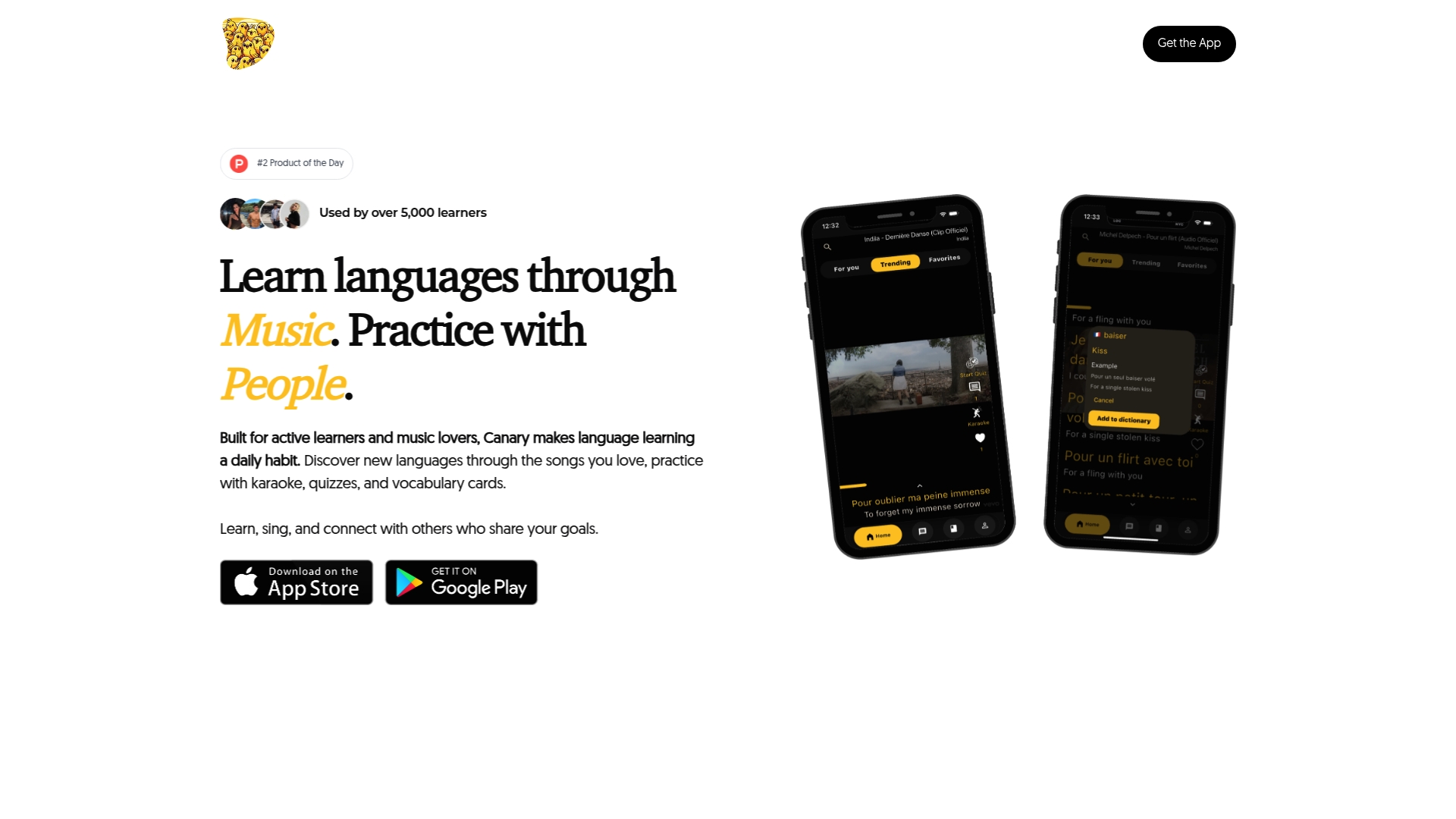
Singwithcanary is a music-driven language learning platform that turns daily practice into something you actually look forward to. You learn vocabulary and pronunciation through real song lyrics, practice with karaoke and quizzes, and connect with international learners who share your passion for music and language. It is built for people who want to learn languages with music and build a habit that does not feel like homework. Whether you are working on your accent, expanding your vocabulary, or just trying to stay consistent, Singwithcanary gives you a reason to show up every day. Start your music-based language routine and see how fast daily practice adds up.
FAQ
How many minutes a day do I need to practice a language?
20–45 minutes daily is the research-backed range for consistent progress. Short, frequent sessions outperform longer sessions done only a few times a week.
What is habit stacking for language learning?
Habit stacking means attaching your language practice to an existing daily routine, like your morning coffee or commute. This removes the need to schedule practice separately and makes the habit automatic over time.
What should I do if I miss a day of language practice?
Apply the never-miss-twice rule and simply return to your normal routine the next day. Do not double up to compensate. Doubling creates negative associations and increases the chance of quitting.
Which app is best for daily vocabulary review?
Anki is the most effective tool for daily vocabulary review because it uses spaced repetition to show you words exactly when you are about to forget them. The Ling app is a strong alternative for learners who prefer a more gamified format.
Does music actually help with language learning?
Yes. Songs reinforce vocabulary, pronunciation, and rhythm in a way that passive study cannot replicate. Platforms like Singwithcanary use song-based learning to combine ear training, vocabulary cards, and speaking practice in one engaging daily session.